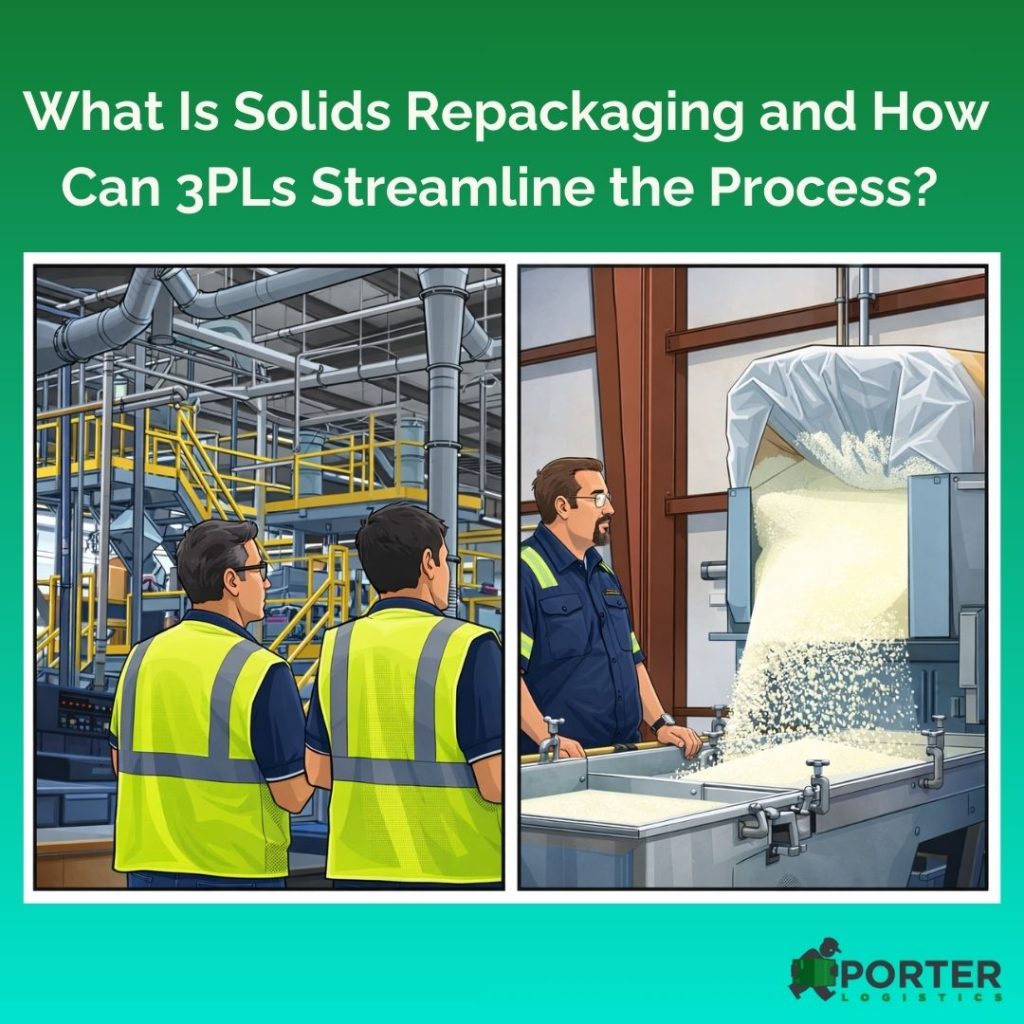
For companies that manufacture or supply dry bulk products–whether those are food-grade products, chemical powders, plastic resins, or pharmaceuticals–solids repackaging is an essential part of the process of getting products to market or to their intended use.
Bulk solids such as powders, pellets, and granules often start out in bulk trucks, rail cars, hoppers, or super sacks, but they typically need to be transferred to smaller containers such as drums, bags, or cartons before they reach retailers, or other buyers or end-users. This repackaging can assist with everything from more efficient transportation and storage to improved product tracking and quality assurance.
While bulk solids repackaging is a standard piece of the supply chain, the reality is not every manufacturer or supplier does it effectively or has a desire to manage every detail of the process in-house. This is where it becomes important to have a reliable and reputable bulk solids repackaging services provider that has experience in your specific industry.
In this article, we’ll explain what solids repackaging is, the benefits it can provide when carried out correctly, and the process of working with a third party logistics (3PL) service provider for bulk-to-retail repackaging services.
Solids repackaging is the process of taking solid products in bulk quantities (such as powders, pellets, granules, and dry goods) and transferring them to smaller containers. This step is typically completed to make the bulk dry goods easier to transport, store, ship, and sell.
A few common types of solids repackaging include:
Products that commonly need bulk repackaging include:
Depending on the type of product being reconfigured, solids repackaging may also be referred to as:
Solid repackaging should not be mixed up with transloading, which is the process of transferring cargo from one mode of transport to another.
When solids repackaging is carried out effectively and efficiently, it can provide a wealth of benefits, including the ones listed below.
With solids repackaging, manufacturers and distributors can give their customers more flexible buying options, allowing them to purchase in smaller, more manageable quantities as needed. Whether a company is selling to export buyers, retailers, directly to consumers, or a combination, it’s possible to prepare the product in packaging that makes the most logistical sense for the buyer’s needs, whether that’s by the drums, boxes, FBICs, or smaller bags or containers.
Transferring bulk solids to smaller, more strategic packaging can reduce the volume and weight of individual packaging units, making them easier to lift, stack, and handle. With smaller packaging units, companies are no longer limited to rail cars, hoppers, and full truckloads (FTL)–they expand their options to additional transportation options, such as less than truckload (LTL) options and parcel freight. It may also be easier to ensure there is no wasted space in warehouse storage.
Repackaging allows manufacturers and distributors to reassemble medications into more appropriate packaging (whether that is in bottles or unit-dose packaging like blister packs), and it also allows them to include labeling with branding and product information for consumers (for all types of dry products, not just medications).
When companies repackage their bulk products into smaller containers (e.g., from hoppers to drums, or drums to super sacks), those smaller units can be barcoded, sealed, and stored, allowing the company to better track each batch. They can also more easily separate and organize their product, such as by expiration date or quality.
For pharmaceutical products, segregating medications is critical for meeting regulatory requirements and helping to reduce medication errors that could harm patients. Product separation is also important for maintaining allergen control for food-grade products, and for avoiding hazardous situations when transporting or storing chemical products (i.e., acids and bases must be kept separate).
The repackaging process provides another opportunity for visual inspection, allowing handlers to identify issues (such as spoiled, contaminated, or defective products) that may have been overlooked in the initial bulk packaging process, or that may have occurred during initial storage or transport.
For example, dust contamination is a common concern for powdered chemicals. Additional opportunities for inspection help ensure products meet quality standards and deliver a positive experience for end users.
There are a slew of rules and regulations that companies must follow when distributing products, especially highly regulated products like pharmaceuticals, hazmat products, and food-grade goods. For example, companies may need to be mindful of standards set by the Food Safety and Modernization Act (FSMA), the FDA’s Current Good Manufacturing Practices (CGMP), or the federal Hazardous Material Regulations (HMR).
Repackaging gives manufacturers, distributors, resellers, and other companies greater control over how their solid products are stored, labeled, and shipped so they can meet government and industry standards and ensure the highest level of product safety and regulatory compliance.
(If you’re a hazmat product supplier, it can be helpful to explore the dos and don’ts for storing dangerous goods.)
There are many ways companies can experience cost savings from efficient repackaging practices. Companies can make better use of their storage spaces, optimizing warehousing expenses. They can optimize their transportation logistics, opening the door to more cost-effective transport solutions. They can better safeguard product integrity, allowing for improved regulatory compliance and reducing the likelihood of fines, sanctions, and forced downtime as well as harm to consumers.
For many companies, strategic solids repackaging is an investment that brings valuable returns.
When repackaging dry bulk products, companies need to use the highest level of care, from using clean and durable containers that can be properly sealed to ensuring safe handling during product transfer to maintaining proper environmental factors (such as temperature) during transport and storage. Whether done intentionally or not, manufacturers and suppliers that do not repackage bulk solids properly may put their products, customers, and companies at risk.
Here are some of the potential risks of poor repackaging processes and workflows:
Unsafe or inefficient repackaging is not worth the risks. Companies that want to avoid these pitfalls must ensure they have a buttoned-up process and an in-house team that can consistently carry it out from start to finish.
For companies that lack those resources or simply don’t want to own this aspect of the supply chain, it can be wise to choose a 3PL company that can handle repackaging, transport, and warehousing, and more on their behalf.
When you work with a reliable 3PL service provider, you hire a single third-party vendor to handle a variety of supply chain logistics. The right partner can assist with repackaging, along with a variety of related needs to help ensure a streamlined process from beginning to end.
Here are a few factors you look for when choosing a 3PL services company for your repackaging and other supply chain needs:
Porter Logistics has a 3PL facility in Savannah, Georgia, along with multiple Atlanta 3PL warehouses. As part of our solids repackaging services, we offer:
We also offer supply-chain proximity and diversity of logistics services in Savannah:
While Porter Logistics clients benefit from our supply-chain proximity, what really sets us apart is our focus on compliance-driven logistics. We hold numerous certifications and partnerships (we’re GMP food grade and cold chain certified, SQF certified, Responsible Distribution Verified by the Alliance for Chemical Distribution (ACD), registered as a HAMAT Chemical Handler, etc.), and we combine clean, modern facilities with modern infrastructure and integrated logistics.
If you’re looking for a Savannah 3PL company to assist with your repackaging needs and supply chain logistics, reach out to our team.