Powering Logistics Operations in Savannah and Beyond
Savannah has quickly become one of the most important logistics and distribution hubs in the Southeast, driven by port expansion, increased freight volumes, and continued investment in regional infrastructure. As operations scale, logistics providers need more than just equipment—they need a material handling partner who understands the pace, pressure, and precision required to keep freight moving efficiently.
That’s where Lift Power comes in.
Lift Power supports high-demand logistics environments with end-to-end material handling solutions designed to maximize uptime, improve safety, and support long-term operational growth. Our team works alongside logistics operators to ensure their facilities, fleets, and workflows are built to perform today and adapt for what’s next.
Proven Experience in Logistics & Distribution Environments
From port-adjacent warehouses to high-throughput distribution centers, Lift Power works with logistics operators who operate on tight schedules and cannot afford unplanned downtime. Our experience in these environments allows us to anticipate challenges before they become disruptions.
A strong example of this approach is our support of Porter Logistics, a growing logistics provider whose operations depend on reliable equipment, responsive service, and scalable solutions. Lift Power delivers the equipment support and ongoing service needed to help their teams maintain consistent productivity across demanding warehouse operations.
When Porter Logistics expanded into the Savannah Port market, they needed a partner who could quickly provide multiple material handling needs: standup lifts with specific requirements, racking with specific measurements based on the facility engineering footprint, and general material handling equipment needs (MHE). LiftPower was able to come onsite to the building, take measurements of the building, and execute quickly with little notice. While the requested standup lifts were being prepped, Liftpower was able to provide short-term rentals to ensure business continuity.
A Holistic Approach to Facility Optimization
At Lift Power, we partner with businesses to optimize their facilities through effective warehouse design, storage solutions, and state-of-the-art material handling equipment. Our goal is to help owners and operators maximize their space, efficiency, and safety under one roof.
By looking beyond individual pieces of equipment and focusing on the full facility layout, Lift Power helps logistics providers build operations that are efficient today and positioned for future growth.
Comprehensive Material Handling, Floor Care & Automation Capabilities
Lift Power goes beyond traditional forklift support. We provide a full range of solutions that help logistics operations run cleaner, safer, and more efficiently, while preparing for future growth.
Our capabilities include:
Through a consultative, data-driven approach, Lift Power helps logistics providers determine where traditional equipment, floor care investments, or automation technologies can deliver the greatest operational value.
A Strong Local Presence in the Savannah Market
Lift Power’s established presence in the Savannah and coastal Georgia market allows us to provide faster response times, local expertise, and service support tailored to port-driven logistics operations. We understand the unique demands created by increased container traffic, extended operating hours, and high-volume throughput.
As Savannah continues to grow as a logistics gateway, Lift Power remains committed to supporting regional operators with scalable solutions and hands-on service that keeps operations running smoothly.
Built for Long-Term Growth, Backed by Service
Logistics operations are constantly evolving—and Lift Power is built to evolve with them. By delivering dependable equipment, proactive service, and forward-looking solutions, we help customers like Porter Logistics focus on growth without sacrificing performance or reliability.
Whether supporting daily material handling needs, maintaining clean and safe facilities, or exploring automation to prepare for the future, Lift Power is proud to be a trusted partner powering logistics operations across Savannah and beyond.
For manufacturers, distributors, and shippers, warehouse location is no longer just a real estate decision. It directly affects transportation costs, inventory efficiency, speed of service, and long-term supply chain resilience. As congestion, labor constraints, and rising costs strain logistics hubs throughout the country, many companies are reevaluating where their distribution networks are anchored.
Savannah, Georgia has emerged as a fast-growing and leading logistics market in the United States—offering global connectivity, extensive capacity, and the flexibility needed to support growth. For companies operating in more constrained or costly markets, relocating or expanding into Savannah is increasingly a strategic upgrade.
Many shippers and distributors of goods today are considering shifting their port networks and 3PL warehousing to Savannah for a number of reasons, including:
In this article, we explore what makes Savannah an attractive choice for companies looking to relocate their port networks and optimize their logistics frameworks.
Savannah’s appeal begins with its position as a primary East Coast gateway for international trade. The Port of Savannah offers direct and frequent container service to Europe and Asia (with China and Vietnam being the port’s largest trade partners). This access makes the port an efficient entry point for global manufacturers and importers.
According to the Georgia Ports Authority (as of December 2025), “The Port of Savannah is one of the best-connected ports in the U.S. to world markets with 35 ship calls a week, 42 doublestack trains per week, and 14,000 truck gate moves daily.”
Additionally, the Port of Savannah has been recognized as:
Compared to many West Coast gateways, Savannah provides shorter and more predictable transit times to Eastern and Midwestern consumption markets. Unlike more congested Northeastern ports, it also benefits from fewer physical constraints and less vessel queuing. The result is the opportunity for improved schedule reliability and fewer disruptions—critical advantages for companies managing just-in-time or time-sensitive inventories.
For exporters, Savannah’s global connectivity also supports competitive outbound flows, making it a balanced gateway for two-way trade rather than a one-directional import port. And the port is not just used by large-scale exporters—the Georgia Ports Authority has noted that the bulk of its exports are produced by small businesses.
One of Savannah’s defining advantages is its depth of capacity. The Port of Savannah is designed to handle large volumes efficiently, with modern, deepwater terminals and ongoing infrastructure investment. This allows the port to accommodate larger vessels while continuing to scale as trade volumes grow.
The Georgia Ports Authority has more than $4.5 billion in infrastructure projects planned for the Garden City Terminal and Ocean Terminal to help increase and improve berth space, yard capacity, trucking gate fluidity, and intermodal connectivity. Upon completion of these projects, Savannah is expected to become a 12.5-million-TEU-capacity port by 2035.
Here are a few recent and ongoing infrastructure improvements at the Port of Savannah:
Unlike ports constrained by urban density or aging infrastructure, Savannah has room to expand. That matters for manufacturers and distributors planning five, ten, or twenty years ahead. As a result, warehousing strategies tied to Savannah are less likely to be disrupted by capacity ceilings, terminal overcrowding, or forced relocations driven by port limitations.
The Port of Savannah has two on-terminal Class I railroads: CSX and Norfolk Southern. This rail access creates competitive options for shippers and supports efficient intermodal distribution strategies.
Some of the benefits of the Port of Savannah’s rail connectivity include:
For manufacturers with production facilities inland or distributors serving multiple regions, Savannah’s rail network offers both flexibility and opportunities to streamline supply chain logistics.
Savannah’s trucking network complements its port and rail strengths. The region is served by a dense base of regional and national carriers, with more than 13,200 motor carriers registered as active users of the Port of Savannah in 2023.
The Port of Savannah has quick access to Interstate 95 (North/South) and Interstate 16 (East/West), allowing freight to move efficiently throughout the Southeast and beyond. With key destinations throughout the Southeast and Midwest being reachable within one- to two-day drive, Savannah is an effective hub for both regional and national distribution.
Additionally, less traffic congestion can result in more reliable transit times and fewer hidden costs tied to driver delays and missed appointments.
Expansion at the Port of Savannah has increased demand for warehousing and third-party logistics (3PL) solutions. According to the Savannah Economic Development Authority (SEDA), Savannah is one of the nation’s fastest-growing industrial markets, and it is home to the largest concentration of retail import distribution centers on the East Coast. SEDA recently reported a total inventory of more than 159 million sq. ft. of warehousing and distribution space (following the addition of 4.9 million sq. ft. feet in Q1 2025) and millions more under construction.
For growing companies, Savannah reduces the risk of outgrowing a facility or market too quickly.
If you’re thinking about restrategizing your port networks, you may want to consider relocating to Savannah. Many companies are shutting down their operations in other ports across the country and moving to the Port of Savannah for more streamlined supply chain logistics.
Here are some of the key benefits that could result from transitioning your port and warehouse logistics to Savannah:
Porter Logistics has 230,400 square feet of warehouse space near the Port of Savannah (within 20 minutes of Garden City Terminal) that helps manufacturers, retailers, brands, and direct sellers optimize their supply chain logistics.
Porter logistics can meet a vast array of warehousing needs, including:
When you partner with Porter Logistics, you benefit from clean, secure, certified facilities that are supported by a full host of 3PL services, integrated technology that streamlines inventory and warehouse management, and fully-trained staff.
Learn more about how Porter Logistics’ Savannah 3PL warehousing can meet your needs.
We’re excited to announce that Porter Logistics is expanding operations to Savannah, Georgia — joining one of the fastest-growing, most dynamic port regions in the country. This isn’t just a milestone for us: it’s a win for our customers, for regional supply chains, and for the Savannah community at large.
In short: Savannah is not just a port — it’s a logistics hub on the rise. That makes it a natural fit for Porter Logistics to extend our footprint.
At Porter Logistics, our commitment to customer satisfaction — rooted in transparency, accountability, and responsive communication — is non-negotiable. Expanding to Savannah allows us to bring those standards to a fast-growing market with tremendous capacity.
We believe high-touch customer service isn’t optional; it’s essential — especially in a fast-paced logistics environment. By combining Savannah’s growth and our service-first approach, we aim to deliver an unmatched logistics experience.
Our expansion is more than just business — it’s a contribution to the local economy and employment ecosystem. Consider:
By establishing a presence here and investing in the local market, Porter Logistics hopes to help amplify that growth while bringing integrity, reliability, and customer-centered logistics services to the Savannah region.
Porter Logistics’ move into Savannah, Georgia marks a new chapter: one that blends top-tier service commitment with strategic expansion, in a region whose growth speaks for itself. If you’re looking for reliability, speed, and a trusted logistics partner that values your business — now more than ever, we’re ready.
Welcome to Savannah. Let’s move forward together.
Savannah, Georgia has become a crucial logistics hub in the United States, including for shippers handling chemical and hazardous materials. With the Port of Savannah’s rapid growth, strong intermodal connectivity, and proximity to major manufacturing markets across the Southeast, the region offers clear advantages—but chemical logistics comes with added complexity.
From regulatory compliance to safety and storage requirements, shippers need a clear understanding of what it takes to move chemicals efficiently and responsibly through Savannah.
The Port of Savannah is the fourth busiest port and the fastest growing port on the U.S. East Coast, and it’s also home to the largest single-terminal container facility of its kind in North America, serving as a critical gateway for imports and exports moving to and from the Southeast. Its location allows chemical shippers to reach key manufacturing centers–such as those in Georgia, the Carolinas, Alabama, Tennessee, and Florida–within one to two days by truck or rail.
For chemical products, this accessibility can reduce transit time, improves inventory fluidity, and supports just-in-time (JIT) manufacturing models. However, these advantages only come to fruition once shipments are planned with the regulatory, safety, and infrastructure realities of chemical logistics in mind.
Savannah’s logistics ecosystem includes deepwater port facilities, Class I rail service, major interstate access, and a growing network of specialized warehouses and terminals. The region supports a wide range of industries that rely heavily on chemical inputs, including manufacturing, agriculture, pharmaceuticals, energy, and consumer goods.
For companies moving large volumes of chemical products through the Port of Savannah and the surrounding hub, it’s important to find third-party logistics providers and terminal operators with expertise in handling hazardous and non-hazardous materials. This specialization is essential, as not all warehouses, carriers, or port facilities are approved to handle regulated chemical products.
Chemical shipments moving through Savannah vary widely in form and risk profile. Common categories include:
Each category comes with specific handling, labeling, and storage requirements that must be addressed before the shipment ever arrives at the port.
Compliance is one of the most critical aspects of chemical logistics. Shippers moving chemicals through Savannah must adhere to a combination of federal, state, and international regulations.
Here are just a few examples of regulating agencies and regulations that chemical shippers typically have to comply with:
The Georgia Ports Authority and local authorities help enforce federal and international laws and regulation for chemical logistics while also enforcing port-specific requirements, such as those related to chemical handling as they pertain to port operations.
Shippers that do not comply with regulations for the transportation and storage of chemical and hazmat goods risk issues such as delays, fines, or rejected shipments. As a result, it’s important for them to maintain the highest level of compliance with state, federal, and international laws and regulations.
Some regulatory compliance factors to consider include:
Chemical logistics carries inherent risk, which is why safety protocols are non-negotiable. Proper segregation of incompatible materials, secondary containment, and clearly defined handling procedures are standard requirements in chemical-approved facilities.
Shippers should also ensure that all personnel involved in handling chemicals—from warehouse staff to drivers—are properly trained and certified. Emergency response planning, spill containment procedures, and security measures are particularly important for high-risk or high-volume chemical shipments.
A strong safety culture not only reduces the risk of incidents but also helps prevent costly operational disruptions and regulatory scrutiny.
Savannah offers a range of storage solutions for chemical shippers, but not all facilities are suitable for regulated materials. Chemical-approved warehouses are designed with features such as ventilation systems, fire suppression, secondary containment, and environmental controls.
For importers managing duty exposure or timing challenges, bonded warehouses and foreign trade zones (FTZs) can provide meaningful financial and operational benefits. These options allow chemicals to be stored, manipulated, or repackaged while deferring or reducing duty payments.
Depending on the product, shippers may also choose between tank storage for bulk liquids and racked or floor storage for packaged chemicals, each with its own compliance and cost considerations.
Chemical shipments moving through Savannah may travel by ocean, rail, truck, or intermodal combinations. Hazmat trucking requires carriers with the proper permits, equipment, and trained drivers, and routing must account for local and regional restrictions.
Rail can be an efficient option for high-volume or long-distance moves, while trucking is often preferred for time-sensitive or last-mile delivery. Minimizing dwell time at the port or warehouse is especially important for chemicals, as extended storage can increase costs and compliance exposure.
Strategic routing and coordination between modes can significantly improve both safety and efficiency.
Environmental responsibility is an increasingly important part of chemical logistics. Shippers must comply with reporting requirements related to emissions, waste handling, and spill prevention, while also considering the broader environmental impact of their operations.
Many logistics providers in Savannah are investing in sustainable practices such as energy-efficient warehouses, optimized routing to reduce emissions, and improved waste management protocols. For chemical shippers, aligning with environmentally responsible partners can help meet corporate sustainability goals while maintaining compliance.
Success in chemical logistics often depends on the expertise of your logistics partners. When vetting chemical logistics companies in Savannah, look for a partner that has:
Porter Logistics meets all this criteria through its Savannah chemical warehouse and comprehensive 3PL services. Registered with the U.S. Department of Transportation and the EPA as a HAZMAT Chemical Handler, Porter Logistics is an experienced partner that prioritizes safety and compliance while delivering an optimal experience through advanced technology streamlined processes.
The 230,400 sq. ft. Savannah chemical warehouse offers:
Some of the most common challenges in chemical logistics include misclassification of materials, inadequate documentation, and selecting warehouses or carriers that are not approved for chemical handling. Underestimating inspection timelines or failing to plan for contingencies can also disrupt shipments.
These risks can be mitigated through early planning, thorough compliance checks, and close coordination with experienced chemical logistics partners who understand the Savannah market.
The Savannah logistics hub offers shippers significant advantages when it comes to storing and transporting chemical products in and out of the area, but those benefits come with responsibility. Navigating regulations, managing risk, and selecting the right partners are essential to moving chemicals safely and efficiently through the region.Porter Logistics can help you move and store your chemical products responsibly and efficiently. Learn more about our certified chemical warehousing in Savannah and reach out for a custom solution.
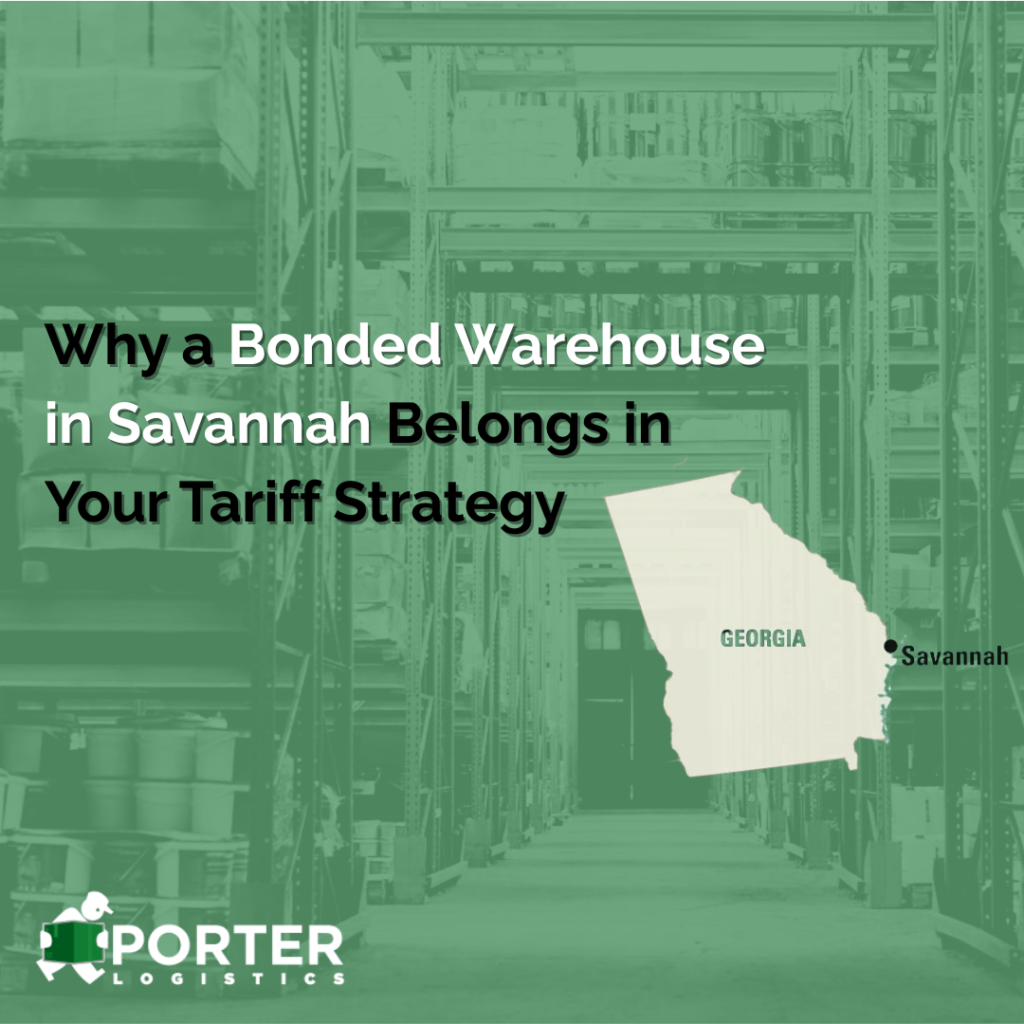
U.S. businesses have a lot to overcome in today’s challenging tariff climate. The average effective U.S. tariff rate jumped from 2.5% at the start of 2025 to a pre-substitution tariff rate of 16.8% in November 2025, according to analysis by the Yale Budget Lab.
With rising tariff rates and shifting policies, importers are facing higher customs costs alongside unpredictable buyer behavior—such as reduced order volumes or supplier changes driven by price sensitivity. These pressures disrupt both inventory flow and working capital, making it increasingly difficult to operate business as usual.
The most competitive suppliers are those that stay nimble by getting creative with their foreign trade logistics.
One tactical approach to consider is the use of customs bonded warehousing services. When importers and re-exporters leverage bonded warehouses at major ports where they’re already active–such as the Port of Savannah, Georgia–they have more say over how and when they spend funds on customs duties, which can help maximize cash flow and reduce business risk.
In this article, we explain what bonded warehouses are, how they work, and why duty-deferred storage in Savannah can be a strategic advantage for importers in the area who are navigating today’s tariff landscape.
A customs bonded warehouse is a secured facility supervised by the U.S. Customs and Border Protection (CBP) where imported goods can be stored for up to five years without paying customs duties until they are released for U.S. consumption. If the goods are re-exported, duties may be avoided altogether.
With customs bonded warehousing services, the warehouse owner or operator assumes liability for the goods through a CBP-required surety bond.
Key benefits include:
Bonded warehouses are classified based on factors such as ownership, product type, storage method, and allowable activities (including cleaning, sorting, labeling, and repackaging).
Because bonded warehouses operate under CBP oversight, they must meet strict compliance standards. Facilities must be properly licensed, bonded (minimum $25,000 per bonded area), insured, and equipped with security measures such as surveillance systems and restricted access.
Operators must also comply with applicable federal regulations—such as FDA requirements for food-grade products—and maintain detailed inventory records subject to regular CBP audits. This oversight ensures goods stored in duty-deferred storage remain secure, compliant, and fully documented.
Most import-eligible products can be stored in a bonded warehouse, such as apparel, food products, alcohol, electronics, automotive parts, raw materials, and luxury goods. Certain restricted or prohibited items—such as explosives—may be excluded.
Bonded warehousing is particularly valuable for:
Despite common misconceptions, customs bonded warehousing services are not limited to large enterprises. Mid-sized and growing importers can also leverage bonded warehouses as a cost-control and cash-flow tool.
Many shippers get confused by the variety of warehousing options that are available. Here’s a breakdown of the difference between regular warehouses, bonded warehouses, and foreign trade zones (FTZs). An FTZ is a designated geographic area within the U.S. (located in or near a CBP port of entry) that is not considered part of U.S. commerce.
| Regular Warehouse | – Warehouses on U.S. soil storing domestic and/or foreign goods – Customs duties for foreign must be paid immediately – Goods considered within U.S. commerce during storage – No supervision by the CBP – No access limitations – No time limit |
Bonded Warehouse | – Warehouses on U.S. soil only storing foreign goods – Delayed payment of customs duties for goods released to the U.S. market (up to 5 years) – Goods not considered within U.S. commerce during storage – Waived customs duties for re-exported goods – Requires a surety bond (warehouse owner/operator assumes liability) – Supervised by the U.S. CBP – Access limited to customs authorities – 5-year time limit |
| Foreign Trade Zone (FTZ) | – Designated geographic area in the U.S. that’s not considered part of U.S. commerce – Not subject to usual customs regulations during storage in the zone – Can store both domestic and foreign goods – Payment of custom duties delayed, but rates may be set upon arrival in certain situations (i.e., component or finished good rate) – Goods considered within international commerce – Warehouse standards supervised by the U.S. CBP, but custom duty rules don’t apply while in the zone – No access limitations – No time limit |
Each option has advantages, but bonded warehouses often provide the most straightforward solution for importers seeking tariff flexibility without the complexity of FTZ designation.
When importers already move freight through a major port, proximity matters. A bonded warehouse in Savannah allows companies to unload containers, store goods in-bond, and make informed decisions about U.S. entry or re-export—without immediately paying duties.
If you’re currently importing and/or exporting goods through the Port of Savannah, Porter Logistics’ bonded warehouses makes it easier to land containers in Savannah, hold inventory in-bond, and then enter the goods for U.S. consumption or re-export via Savannah or other ports without paying U.S. duties.
Porter Logistics offers comprehensive bonded warehousing and 3PL warehousing in Savannah that provides seamless storage and supply chain logistics for all types of products, including food-grade products, HAZMAT products, pharmaceuticals, and more.
To learn more about duty-deferred storage in Savannah and our full range of Savannah 3PL solutions, contact our team today.
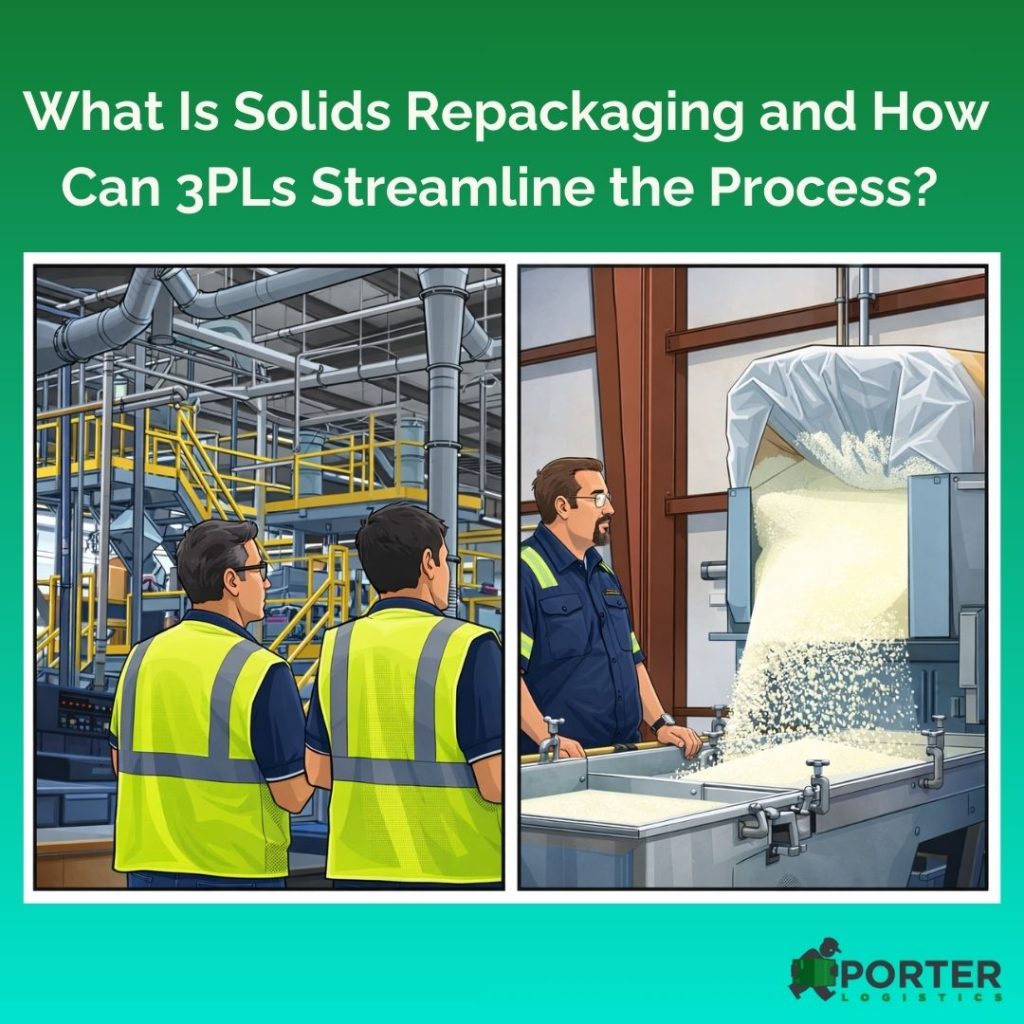
For companies that manufacture or supply dry bulk products–whether those are food-grade products, chemical powders, plastic resins, or pharmaceuticals–solids repackaging is an essential part of the process of getting products to market or to their intended use.
Bulk solids such as powders, pellets, and granules often start out in bulk trucks, rail cars, hoppers, or super sacks, but they typically need to be transferred to smaller containers such as drums, bags, or cartons before they reach retailers, or other buyers or end-users. This repackaging can assist with everything from more efficient transportation and storage to improved product tracking and quality assurance.
While bulk solids repackaging is a standard piece of the supply chain, the reality is not every manufacturer or supplier does it effectively or has a desire to manage every detail of the process in-house. This is where it becomes important to have a reliable and reputable bulk solids repackaging services provider that has experience in your specific industry.
In this article, we’ll explain what solids repackaging is, the benefits it can provide when carried out correctly, and the process of working with a third party logistics (3PL) service provider for bulk-to-retail repackaging services.
Solids repackaging is the process of taking solid products in bulk quantities (such as powders, pellets, granules, and dry goods) and transferring them to smaller containers. This step is typically completed to make the bulk dry goods easier to transport, store, ship, and sell.
A few common types of solids repackaging include:
Products that commonly need bulk repackaging include:
Depending on the type of product being reconfigured, solids repackaging may also be referred to as:
Solid repackaging should not be mixed up with transloading, which is the process of transferring cargo from one mode of transport to another.
When solids repackaging is carried out effectively and efficiently, it can provide a wealth of benefits, including the ones listed below.
With solids repackaging, manufacturers and distributors can give their customers more flexible buying options, allowing them to purchase in smaller, more manageable quantities as needed. Whether a company is selling to export buyers, retailers, directly to consumers, or a combination, it’s possible to prepare the product in packaging that makes the most logistical sense for the buyer’s needs, whether that’s by the drums, boxes, FBICs, or smaller bags or containers.
Transferring bulk solids to smaller, more strategic packaging can reduce the volume and weight of individual packaging units, making them easier to lift, stack, and handle. With smaller packaging units, companies are no longer limited to rail cars, hoppers, and full truckloads (FTL)–they expand their options to additional transportation options, such as less than truckload (LTL) options and parcel freight. It may also be easier to ensure there is no wasted space in warehouse storage.
Repackaging allows manufacturers and distributors to reassemble medications into more appropriate packaging (whether that is in bottles or unit-dose packaging like blister packs), and it also allows them to include labeling with branding and product information for consumers (for all types of dry products, not just medications).
When companies repackage their bulk products into smaller containers (e.g., from hoppers to drums, or drums to super sacks), those smaller units can be barcoded, sealed, and stored, allowing the company to better track each batch. They can also more easily separate and organize their product, such as by expiration date or quality.
For pharmaceutical products, segregating medications is critical for meeting regulatory requirements and helping to reduce medication errors that could harm patients. Product separation is also important for maintaining allergen control for food-grade products, and for avoiding hazardous situations when transporting or storing chemical products (i.e., acids and bases must be kept separate).
The repackaging process provides another opportunity for visual inspection, allowing handlers to identify issues (such as spoiled, contaminated, or defective products) that may have been overlooked in the initial bulk packaging process, or that may have occurred during initial storage or transport.
For example, dust contamination is a common concern for powdered chemicals. Additional opportunities for inspection help ensure products meet quality standards and deliver a positive experience for end users.
There are a slew of rules and regulations that companies must follow when distributing products, especially highly regulated products like pharmaceuticals, hazmat products, and food-grade goods. For example, companies may need to be mindful of standards set by the Food Safety and Modernization Act (FSMA), the FDA’s Current Good Manufacturing Practices (CGMP), or the federal Hazardous Material Regulations (HMR).
Repackaging gives manufacturers, distributors, resellers, and other companies greater control over how their solid products are stored, labeled, and shipped so they can meet government and industry standards and ensure the highest level of product safety and regulatory compliance.
(If you’re a hazmat product supplier, it can be helpful to explore the dos and don’ts for storing dangerous goods.)
There are many ways companies can experience cost savings from efficient repackaging practices. Companies can make better use of their storage spaces, optimizing warehousing expenses. They can optimize their transportation logistics, opening the door to more cost-effective transport solutions. They can better safeguard product integrity, allowing for improved regulatory compliance and reducing the likelihood of fines, sanctions, and forced downtime as well as harm to consumers.
For many companies, strategic solids repackaging is an investment that brings valuable returns.
When repackaging dry bulk products, companies need to use the highest level of care, from using clean and durable containers that can be properly sealed to ensuring safe handling during product transfer to maintaining proper environmental factors (such as temperature) during transport and storage. Whether done intentionally or not, manufacturers and suppliers that do not repackage bulk solids properly may put their products, customers, and companies at risk.
Here are some of the potential risks of poor repackaging processes and workflows:
Unsafe or inefficient repackaging is not worth the risks. Companies that want to avoid these pitfalls must ensure they have a buttoned-up process and an in-house team that can consistently carry it out from start to finish.
For companies that lack those resources or simply don’t want to own this aspect of the supply chain, it can be wise to choose a 3PL company that can handle repackaging, transport, and warehousing, and more on their behalf.
When you work with a reliable 3PL service provider, you hire a single third-party vendor to handle a variety of supply chain logistics. The right partner can assist with repackaging, along with a variety of related needs to help ensure a streamlined process from beginning to end.
Here are a few factors you look for when choosing a 3PL services company for your repackaging and other supply chain needs:
Porter Logistics has a 3PL facility in Savannah, Georgia, along with multiple Atlanta 3PL warehouses. As part of our solids repackaging services, we offer:
We also offer supply-chain proximity and diversity of logistics services in Savannah:
While Porter Logistics clients benefit from our supply-chain proximity, what really sets us apart is our focus on compliance-driven logistics. We hold numerous certifications and partnerships (we’re GMP food grade and cold chain certified, SQF certified, Responsible Distribution Verified by the Alliance for Chemical Distribution (ACD), registered as a HAMAT Chemical Handler, etc.), and we combine clean, modern facilities with modern infrastructure and integrated logistics.
If you’re looking for a Savannah 3PL company to assist with your repackaging needs and supply chain logistics, reach out to our team.
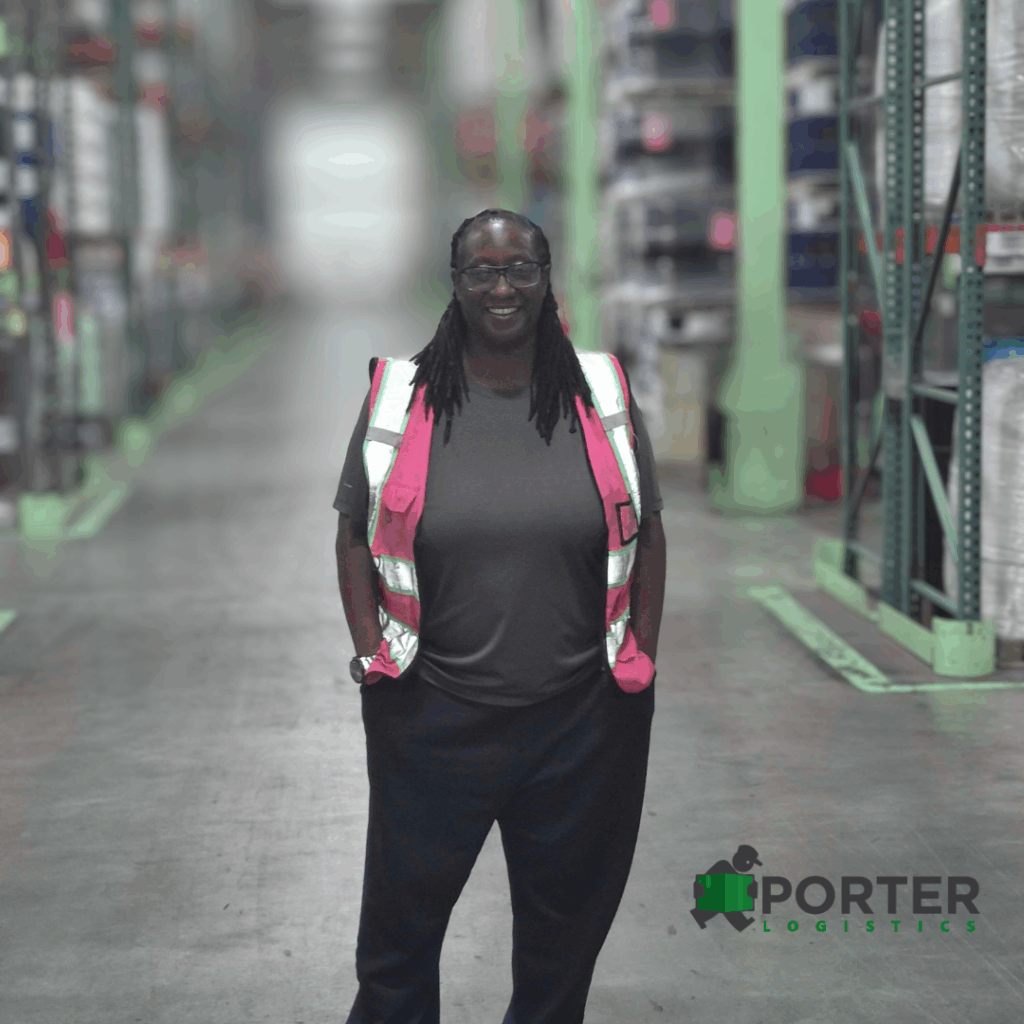
At Porter Logistics, our people are the heart of every smooth delivery, secure transfer, and positive customer interaction. Today, we are proud to highlight Evelyn Patricia (Pat) Luke, our Customer Service Manager, whose leadership and commitment to excellence continue to elevate our customer experience and internal operations.
Pat’s journey from military service to logistics leadership is a powerful example of dedication, integrity, and continuous growth—qualities that help drive Porter Logistics forward every day.
Pat began her professional career in the military, where she built a foundation of discipline, teamwork, and leadership. These early experiences shaped the way she approaches challenges and supports the teams she leads today.
Her logistics career officially launched in 2011 when she joined Amware as a Quality Checker. Over time, she advanced into roles such as:
Through each step, Pat strengthened her operational knowledge and developed a deep understanding of customer support within complex logistics environments.
In 2022, she joined Porter Logistics to continue growing her career in customer service and operational excellence. Today, she plays a key role in improving communication, supporting external customers and internal teams, and enhancing the processes that help warehouse and logistics operations run efficiently.
When asked what attracted her to Porter Logistics, Pat highlighted three key factors:
Porter’s modern approach to operational visibility—including advanced inventory tracking and real-time communication tools—immediately stood out.
Pat describes Porter Logistics as a place where employees feel valued and teamwork is at the center of every operation.
The Customer Service Manager role allows her to directly shape customer experience and strengthen cross-department communication.
As a leader, Pat is committed to creating an environment built on:
She believes leaders should empower their teams, streamline processes, and ensure that everyone has the guidance and tools needed to succeed. Her leadership style aligns perfectly with Porter Logistics’ mission to provide reliable, transparent, and customer-focused 3PL services.
Pat credits her parents as her most profound influences:
These values continue to guide her both professionally and personally.
Most people may not know that Pat is a skilled basketball player. While serving in the military, she competed for two years in Ansbach, Germany, at the Army Aviation level—an experience she describes as unforgettable.
Outside of work, she loves working on puzzles. For her, the satisfaction of turning small pieces into a complete picture mirrors the work she does every day: bringing together processes, communication, and teamwork to create consistent results.
If Pat could have dinner with any leaders, she would choose Barack Obama and Colin Powell. She admires their ability to lead with strength, composure, and moral courage—especially during times of intense pressure. Their leadership philosophies closely align with her own.
“Never stop learning, stay committed to the process, and always lead with integrity.”
This mindset continues to guide her as she supports Porter Logistics teams and customers.
As Porter Logistics Customer Service Manager, Pat strengthens the link between operations and customers by:
Her leadership helps ensure customers receive the reliable support and visibility they expect from a trusted 3PL partner.
Pat’s journey is a reminder that great logistics is powered by great people. Porter Logistics is proud to have leaders like her who bring dedication, integrity, and an unwavering commitment to customer experience.
To learn more about Porter’s team and services, explore our 3PL solutions or reach out for a custom quote.
Intro:
In late October 2025, the U.S. and South Korea announced that they had “pretty much finalized” a trade‐related agreement — part of a broader strategy to stabilize and deepen bilateral economic ties. Supply Chain Dive For the state of Georgia, this development is far from peripheral: South Korea is one of the fastest‐growing sources of investment in Georgia’s manufacturing and logistics landscape. Yet this opportunity also comes with complexity—most visibly the recent large‐scale immigration enforcement action at the Hyundai Motor Group/LG Energy Solution battery plant in Ellabell. Logistics providers need to understand both the promise and the risk to stay ahead.
Georgia has become a magnet for Korean investment in manufacturing, particularly in automotive, batteries, and advanced logistics operations. The new U.S.-Korea trade deal promises more favorable tariff conditions: for example, a drop in U.S. import tariffs on Korean goods from 25 % to 15 %. Supply Chain Dive
For logistics providers like Porter Logistics, this means:
Georgia’s statewide economic development strategy has long pitched the state as Korea’s gateway into the Southeastern U.S. market. Korean firms bring capital, technology, and manufacturing scale—and logistics providers must be structured, agile, and compliant to support that growth.
While the trade deal represents opportunity, a major enforcement action at the Hyundai/LG battery facility in Georgia underscores risk and regulatory complexity.
On September 4, 2025, U.S. immigration authorities raided a battery plant under construction at the Hyundai‐LG campus in Ellabell, Georgia, detaining approximately 475 individuals—over 300 of them South Korean nationals. I The event was described as the largest single‐site law‐enforcement action of its kind by U.S. authorities.
Key implications for supply chains and logistics:
Therefore, while Korean investment in Georgia is robust and growing, the recent enforcement action serves as a cautionary note: regulatory, immigration, and compliance issues must be front of mind for all supply‐chain actors.
As a logistics provider operating in Georgia and supporting international trade flows, Porter Logistics is well positioned to help clients navigate this evolving Korea-U.S. environment. Here’s how:
The Korea-U.S. trade deal signals a new chapter for Georgia’s economy—one where Korean investment deepens and logistics providers like Porter Logistics play a vital enabling role. Yet, the story is not without its cautionary side-bars: the massive enforcement action at the Hyundai/LG plant shows that regulatory and workforce risks remain real and can ripple through supply chains.
For Porter Logistics, the path forward is clear: position as the strategic partner for Korean manufacturing clients operating in Georgia, build deep expertise in Korea–U.S. trade flows, ensure high compliance and risk-management standards, and deliver agile logistics solutions that can respond not just to growing volume, but to complexity, speed, and cross-border dynamics.
By doing so, Porter Logistics isn’t simply moving freight—it’s helping anchor a global supply-chain partnership between Korea and Georgia, supporting regional economic growth and enabling Korean manufacturing investment with logistics reliability and strategic foresight.
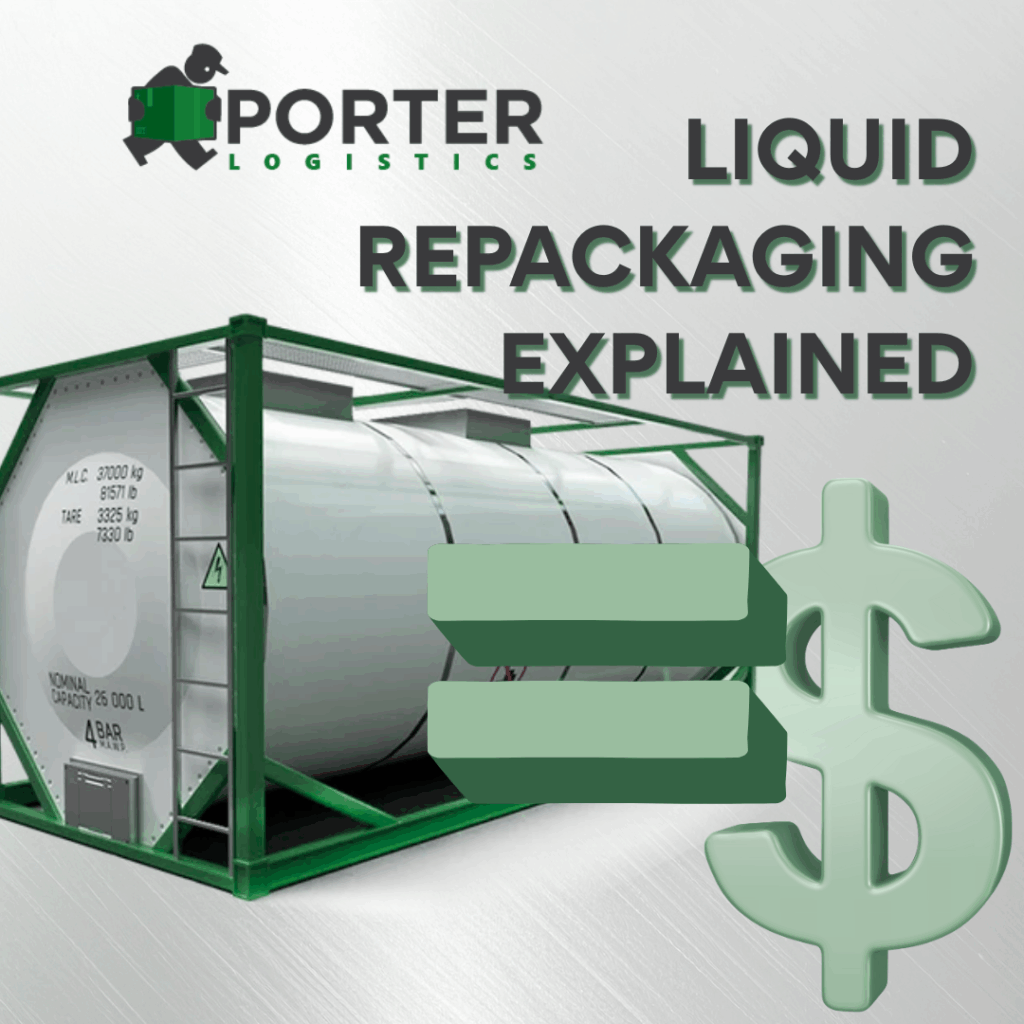
In the food & chemical industries, most liquid products don’t stay in the container they start in. A shipment might leave a manufacturing plant in a rail car or ISO tank and end up in a drum, IBC (intermediate bulk container), or five-gallon pail by the time it reaches a customer.
That in-between step lives inside a chemical logistics market worth about $275.1 billion in 2025 and projected to reach $391.7 billion by 2034, where services like repackaging, labeling, and specialized handling drive value.
For chemical, hazmat, and food-grade suppliers, repackaging can be the difference between meeting demand and losing shelf space. It’s also one of the more effective ways to reduce freight costs and tighten up compliance.
Liquid repackaging refers to decanting or transferring bulk liquids — such as oils, surfactants, solvents, flavorings, or food ingredients — from one container format to another. (Not to be confused with transloading, which refers to transferring cargo between modes of transport.)
Common transfer types include:
The objective varies: smaller pack sizes for distribution, easier handling for customers, export packaging compliance, or cross-contamination prevention for food and hazmat materials.
Because these products are high-value and often high-risk, the process happens inside controlled environments like certified 3PL facilities equipped for hazmat, food-grade, and other regulated materials.
Many manufacturers ship product in bulk, but sell it in smaller volumes. Repackaging allows them to service both. For example, a liquid chemical might ship in a 20,000-gallon tank car and then be repackaged into 55-gallon drums for domestic customers and 1,000-liter IBCs for export buyers.
Drayage and detention charges add up when bulk containers sit idle, but repackaging can free rail cars and ISO tanks faster. Once product is in portable drums or totes, it can move by LTL, truckload, or parcel freight.
Hazardous materials, food ingredients, and industrial liquids often face different packaging and labeling rules across regions. Repackaging ensures the product meets each market’s container, labeling, and documentation standards.
Drums and totes can be barcoded, sealed, and stored with batch traceability. That allows producers to separate lots by quality or expiration date. This is especially advantageous for food ingredients, adhesives, and specialty chemicals.
At a qualified 3PL or bulk-handling facility, liquid repackaging happens under strict safety and sanitation controls. A typical workflow includes:
Many liquids transfer optimally at different temperatures. Heating methods like steam generators or warming blankets for IBC’s are used to heat product as high as 110F to facilitate smooth transfer.
The entire process is documented digitally — temperature, volume, seal numbers — to satisfy audits or inspections.
| Source | Destination | Typical Use Case |
| Rail car | 55-gal drum | Regional distribution or export sales |
| ISO tank | IBC tote | Contract manufacturing or intermediate supply |
| Tank wagon | Retail pack | Finished goods, cleaning products, flavorings |
| Bulk tote | Drum | Small-batch sampling or product segregation |
Each conversion step must preserve product integrity, avoid contamination, and prevent exposure to air or moisture. Many operations use nitrogen blanketing or closed transfer to achieve this.
While repackaging adds a handling step, it often lowers total cost when you view it across the supply chain.
Not to mention, companies that use 3PLs for their liquid repackaging also avoid the capital costs of installing pumps, containment pads, and safety systems onsite. 3PLs have this infrastructure ready-to-go along with a team that knows how to use it safely and efficiently.
Both hazmat and food-grade logistics require segregation, sanitation, and traceability. At Porter Logistics, we handle both classifications and more. That means the same infrastructure can safely move a food ingredient one day and a regulated solvent the next, using dedicated lines and storage zones.
Hazmat repackaging requires compliant transfer systems, spill containment, secondary barriers, and trained hazmat technicians. Facilities must adhere to OSHA and DOT requirements and maintain SDS documentation for every product handled.
Food-grade repackaging must operate under GMP and AIB (or SQF) standards (all are certifications that Porter possesses). Tanks and hoses are stainless or food-grade lined, and every transfer line is sanitized between products. Pest control, lighting, and air-handling systems must also meet FDA or state food code guidelines.
A small number of 3PLs specialize in liquid repackaging because the barrier to entry is high. The equipment, permits, and certifications require ongoing oversight.
Porter Logistic’s 3PL facility in Savannah (along with our Atlanta 3PL warehouses) handles:
Our main advantage lies in combining compliance infrastructure with supply-chain proximity. Being close to the Port of Savannah shortens turnaround times for inbound bulk cargo while giving exporters access to immediate container availability.
Each and every transfer needs a paper trail. Under U.S. DOT hazmat rules, shipping papers have to identify the material (UN/ID number, proper shipping name, hazard class, packing group) and quantity so that the movement of every drum, tote, or tank can be tracked.
For food-grade liquids, the bar is higher. FSMA and CGMP expectations push facilities to keep records that show a clear history for each lot, typically through:
Most customers expect to review those records during audits, so a repackaging partner that treats documentation as a core process tends to have a smoother time with both regulators and clients.
Repackaging demand continues to climb as more producers consolidate bulk shipping and regionalize final distribution. E-commerce in B2B chemicals, smaller production runs, and sustainability goals (reuse of IBCs and drums) are driving the trend.
At the same time, regulatory scrutiny is getting tighter. Companies that invest in specialized liquid-handling and repackaging operations have an advantage: they’ll respond faster to shifting markets and regulatory changes without having to redesign their entire distribution system.
Liquid repackaging may look like a behind-the-scenes process, but it keeps the supply chain moving. From transferring hazmat materials in our Savannah Hazmat warehouse from ISO tanks to converting food-grade ingredients into IBCs for export, it all requires precision, documentation, and experience.
At Porter Logistics, our team manages liquid repackaging with certified processes that protect both the product and the people handling it. Every transfer is performed with safety, efficiency, and compliance at the forefront.
Learn more about what Porter has to offer by exploring our different 3PL services and request a free custom quote today.
As global food and agricultural supply chains evolve, Savannah, Georgia, has proven to be the Southeast’s most vital logistics hub. Positioned at the intersection of domestic production and international trade, Savannah’s infrastructure enables seamless movement of both imported and exported goods.
With the Port of Savannah ranked as the #1 U.S. port for agricultural exports, the region has transformed into a dual-flow powerhouse. Imports of finished goods and packaging for major retailers come in, and exports of U.S.-grown commodities and food products head out to international markets.
For food manufacturers, agribusiness exporters, and distributors, this combination comes with a unique advantage. The same logistics infrastructure that moves packaged foods for big-box stores like Walmart and Target can also move soybeans, corn, and poultry from South Georgia farms to buyers all over the world.
At Porter Logistics, our food-grade 3PL facility in Savannah sits at the heart of this flow. Audited by the Georgia Department of Agriculture (GDA) among other certifying bodies, our warehouse meets food safety standards while optimizing throughput for importers and exporters alike.
Savannah’s rise as a food and agricultural export leader comes as no surprise, and the numbers speak for themselves. In September 2025, the Georgia Ports Authority (GPA) reported that the Port of Savannah handled 486,000 twenty-foot equivalent units (TEUs), which represents an 8% increase year-over-year.
The same report showed that from July 1st–Sept 30th, container trade was up 4.7%, with nearly 1.5 million TEUs moved through the port. On the rail side, the port achieved its busiest September ever with 51,235 container lifts, up 21% versus the same month last year.
With truck gate turn-times averaging 32 minutes for single moves and 50 minutes for dual import/export moves, Savannah offers one of the fastest throughput profiles in the U.S. container-port network — making it especially ideal for food and agribusiness logistics.
While some U.S. ports specialize in either imports or exports, Savannah’s advantage lies in its dual-flow capability.
This dynamic creates natural efficiencies for food-grade 3PL providers: consistent container availability, shorter dwell times, and better rail/highway access for both inbound and outbound shipments. Shippers can expect lower drayage costs, faster port turns, and access to temperature-controlled warehousing near the terminal.
At Porter Logistics, we provide flexible food-grade import handling, export staging, and compliant storage that serves both flows of the food supply chain.
Georgia’s agricultural output continues to fuel its dominance in global food exports. According to the GDA, the industry generates more than $74 billion in annual economic impact and supports nearly 400,000 jobs statewide.
To provide a real-world snapshot, export commodities moving through Savannah include:
As refrigerated export capacity and intermodal access expand across Savannah, Porter Logistics translates that infrastructure into measurable efficiency for food manufacturers, agribusiness exporters, and dozens of other industries.
Savannah’s logistics ecosystem continues to expand. Recent and ongoing projects by the GPA enhance the port’s ability to move agricultural goods at scale:
Savannah’s dual-flow ecosystem benefits both sides of the supply chain. The steady flow of retail imports from global suppliers (e.g., food, beverages, packaging materials, and household goods) ensures a constant supply of containers and truck capacity in the region.
For exporters, that means fewer empty containers leaving the port and more availability to load agricultural goods outbound. This closed-loop efficiency is why Savannah continues to grow faster than many competing ports.
At our facility, imported food products for big-box retailers can be received, stored, and redistributed across the Southeast while outbound agricultural goods can be staged and stuffed into containers for export, often using the same logistical infrastructure.
Operating in Savannah as a food-grade 3PL means serving as a strategic supply-chain partner that meets both regulatory and operational demands. Porter Logistics’ Savannah facility is:
This makes our warehouse ideal for companies that handle agricultural commodities for export, packaged or processed foods for distribution, and/or raw ingredients awaiting conversion or re-export. Whether consolidating exports for international shipment or receiving retail imports for U.S. distribution, our infrastructure supports both.
For manufacturers and exporters considering Savannah as an agricultural logistics hub, choosing the right food-grade 3PL is critical. Consider these factors:
Porter Logistics meets all of these criteria, offering scalable, compliant, and strategically located Savannah-based food-grade warehousing to support the city’s growing export market.
Porter Logistics’ Savannah facility sits at the intersection of Georgia’s agricultural production and global trade. We strive to help companies in the food and agriculture sectors move their products safely, efficiently, and compliantly.
We provide:
Learn more about our food-grade logistics in Savannah and how Porter Logistics helps businesses bridge global supply chains through the Port of Savannah.