At a cold dock, time matters more than anywhere else. When a refrigerated trailer arrives, speed, coordination, and temperature control become the main KPIs. Because if at this stage, unloading takes too long, temperature-sensitive products can begin to warm beyond safe thresholds.
This might compromise product quality and jeopardize both compliance and customer trust.
At Porter Logistics, we manage a wide range of regulated goods, including food-grade and pharmaceutical freight. That kind of work puts a higher standard on how we run our docks. One of the ways we protect our cold chain is by keeping scheduling structured, coordinated, and visible for our teams and our clients.
| Quick Stat Research found that reefer drivers experienced detention at more than 25% of stops. Their average wait times reached 1.7 hours beyond the standard 2-hour threshold. That extra time on the dock puts cold chain integrity directly at risk. |
Cold chain breaks often start with something as simple as a late trailer, a crowded staging area, or a dock door that stays open longer than planned.
Temperature-sensitive freight doesn’t offer much room for delay. And unlike dry storage, where staging can be more flexible, cold storage often has limited buffer space and stricter door controls. If schedule delays happen, the exposure adds up quickly, and it’s not always caught until later. These issues can lead to rejected shipments or compliance flags, even when the product was handled properly overall.
A study by ATRI found that in 2023 alone, detention time across for-hire trucking exceeded 135 million hours. And refrigerated trailer drivers experienced detention 56.2% of the time, which is significantly higher than the industry average. This shows that these delays aren’t hypothetical. They’re already built into daily operations unless dock management is actively optimized.
You might have seen that traditional scheduling methods (like calls, emails, or spreadsheets) don’t hold up well in cold environments. Cold docks require tighter planning and better coordination. Schedules need to reflect not just time slots, but actual operational capacity.
What actually needs to be scheduled is a set of conditions:
Without a system that ties all these variables together, things break down quickly. Double-booking becomes more likely, equipment gets stretched, and teams lose visibility. And when more than one trailer shows up without clear direction, the entire dock can fall behind.
| This inefficiency affects the larger logistics cycle According to recent data, 57% of drivers reported being late or canceling a delivery due to detention at a previous stop. Moreover, 52% drivers ran out of available driving hours because of delays. |
Cold storage operations operate under scrutiny, especially when handling food or pharmaceuticals. Under guidelines like the FDA’s FSMA, cold chain processes are required to be both controlled and documented, including how long a shipment stays on the dock and how it’s handled during transfer.
If scheduling is disorganized, it becomes harder to answer questions like:
These details matter in audits and inspections, and they shape how customers view your reliability. That’s how scheduling is directly tied to compliance, reporting, and accountability.
To maintain product safety and regulatory compliance, cold docks must run on a fixed rhythm. Every trailer turn, door assignment, and load plan must be thought through in advance and tracked in real time.
At Porter, our dock scheduling system gives us the precision needed to operate with that rhythm. Door usage is mapped based on temperature zones. Appointment slots are structured around load complexity, staging capacity, and required dwell time. As a result, our dock doors only open when they should, trailers are processed on time, and cold chain exposure is minimized.
This approach gives us operational clarity. Our workers know which door is tied to which appointment, equipment is aligned in advance, and staging plans are executed with intent. As a result, the chaos that can creep into busy loading docks is replaced by predictable flow.
To support this operation, Porter uses Arrivy’s dock scheduling software. With it, our customers can book appointments directly through a self-serve portal. Appointments are aligned with real-time dock availability and governed by customized rules (buffer times, booking limits, and resource-specific constraints).
Arrivy also enables us to:
For example, if a customer books a frozen seafood delivery, they can book a slot tied to a sub-zero dock door. The system blocks adjacent time windows for staging and cleanup. It also makes sure the right equipment and crew are ready when the trailer arrives.
What matters here is control. Arrivy helps our dock managers make informed decisions by presenting accurate, real-time data. And it provides our carriers with the consistency they need to plan routes and dwell time expectations.
The benefits aren’t abstract. With better scheduling tools in place, our customers get a more predictable experience at the dock. Appointments are faster. Wait times go down. And there’s less back-and-forth on confirming or adjusting times.
Internally, our teams can plan better. Fewer calls and emails mean fewer manual updates. Our crews spend more time loading and less time waiting for paperwork or direction.
From a compliance standpoint, it also means we have a clear record of what happened, when, and by whom.
Cold docks don’t give much room for error. Even a short delay can put a shipment at risk or cause a compliance issue. That’s why scheduling has to reflect real capacity, real conditions, and the actual pace of the work on the ground.
At Porter Logistics, we’ve built our dock operations with this in mind. With the help of Arrivy, we keep appointments on track, reduce dwell time, and maintain the cold chain every step of the way.
As one of Atlanta’s premier third-party logistics (3PL) providers, Porter Logistics has built its reputation on delivering reliable warehousing and distribution services for some of the world’s leading brands across regulated industries—ranging from pharmaceuticals and nutraceuticals to food, beverage, and hazardous materials.
But with rapid growth comes operational complexity. Managing a vast and evolving chemical inventory had become increasingly difficult for the Porter team—until they partnered with VelocityEHS and implemented the Accelerate® Platform.
Founded in 2016, Porter Logistics has scaled quickly to operate three large Atlanta-area warehouses totaling over 750,000 square feet. According to company president and co-founder John Foshee, their early chemical management methods—paper files, digital folders, and manual tracking—couldn’t keep pace with the company’s expanding inventory and increasing compliance requirements.
“We were a startup. We could handle things with paper and basic organizational methods,” Foshee recalls. “But now we’re handling many more products with many different chemistries… we’ve got to stay on top of things and stay compliant.”
Working heavily in regulated environments like hazardous goods, pharmaceuticals, and food-grade warehousing, Porter needed a smarter way to manage chemical safety data and meet requirements like EPA Tier II reporting under EPCRA.
In late 2022, Porter began evaluating chemical management software vendors. After considering three options, they quickly selected VelocityEHS Chemical Management for its depth, user-friendliness, and industry-leading SDS library which has helped Porter Logistics in its compliance efforts
“It acts as an organized repository for us,” said Foshee. “It has been able to scale with us as we continue to grow.”
Porter now manages tens of thousands of SDSs across clients using the Accelerate® platform, with employees easily locating specific documents via CAS numbers or other chemical identifiers. This capability not only supports compliance but also helps evaluate alternative chemistries and verify regulatory alignment.
The benefits of VelocityEHS go beyond hazardous goods:
With all chemical data centralized and instantly accessible, EPA Tier II reporting is now faster and more accurate, allowing Porter to quickly cross-reference ingredients against the EPA’s Extremely Hazardous Substances list.
“It’s helped us to stay organized, stay safe and stay in compliance,” Foshee affirms.
As Porter continues to expand operations—including bulk chemical transloading via its rail-served Atlanta warehouse—the team is confident that VelocityEHS will remain a valuable tool for managing complexity.
Whether managing hazardous inventory, supporting food-grade storage, or navigating the evolving regulatory landscape, Porter Logistics and VelocityEHS are proving that smart chemical management drives operational excellence.
Learn more about how VelocityEHS helps companies like Porter Logistics at EHS.com

We’re excited to announce that Porter Logistics will be exhibiting at ChemEdge 2025, one of the industry’s premier events for chemical distribution professionals. As a trusted 3PL partner in warehousing and logistics—including specialized services for hazardous materials—this event is the perfect place for us to connect, collaborate, and showcase how we’re helping move the chemical supply chain forward.
Hosted by the Alliance for Chemical Distribution (ACD), ChemEdge brings together top decision-makers from across the industry to explore innovative solutions, best practices, and regulatory updates that impact chemical logistics. And this year, we’re bringing something special to the show floor.
Stop by our booth to learn how Porter Logistics supports chemical distribution through cold storage, compliant warehousing, and secure transportation solutions designed for today’s evolving regulations and safety standards.
???? What you’ll find at our booth:
We can’t wait to connect, answer questions, and show you how we bring safety, precision, and innovation to every shipment.
In the weeks leading up to ChemEdge, we’ll be sharing behind-the-scenes content, team introductions, and sneak peeks of what we’re bringing to the show.
Stay connected by following us on:
Don’t forget to follow and tag @ACD_Chem on X and @Alliance for Chemical Distribution on LinkedIn. Use and explore event hashtags #ACDCE25 and #ACDConnection to join the conversation!
???? Event: ChemEdge 2025
???? Date: August 13-15 2025
???? Register: https://bit.ly/3ZegmcM
Whether you’re looking for a reliable logistics partner, exploring cold chain solutions, or simply curious about how to optimize your chemical distribution—Porter Logistics is ready to meet you at ChemEdge.
Let’s connect, collaborate, and shape the future of chemical logistics—together.
Let me know your booth number and product/service focus, and I can plug that in to finalize this for publishing or social sharing!
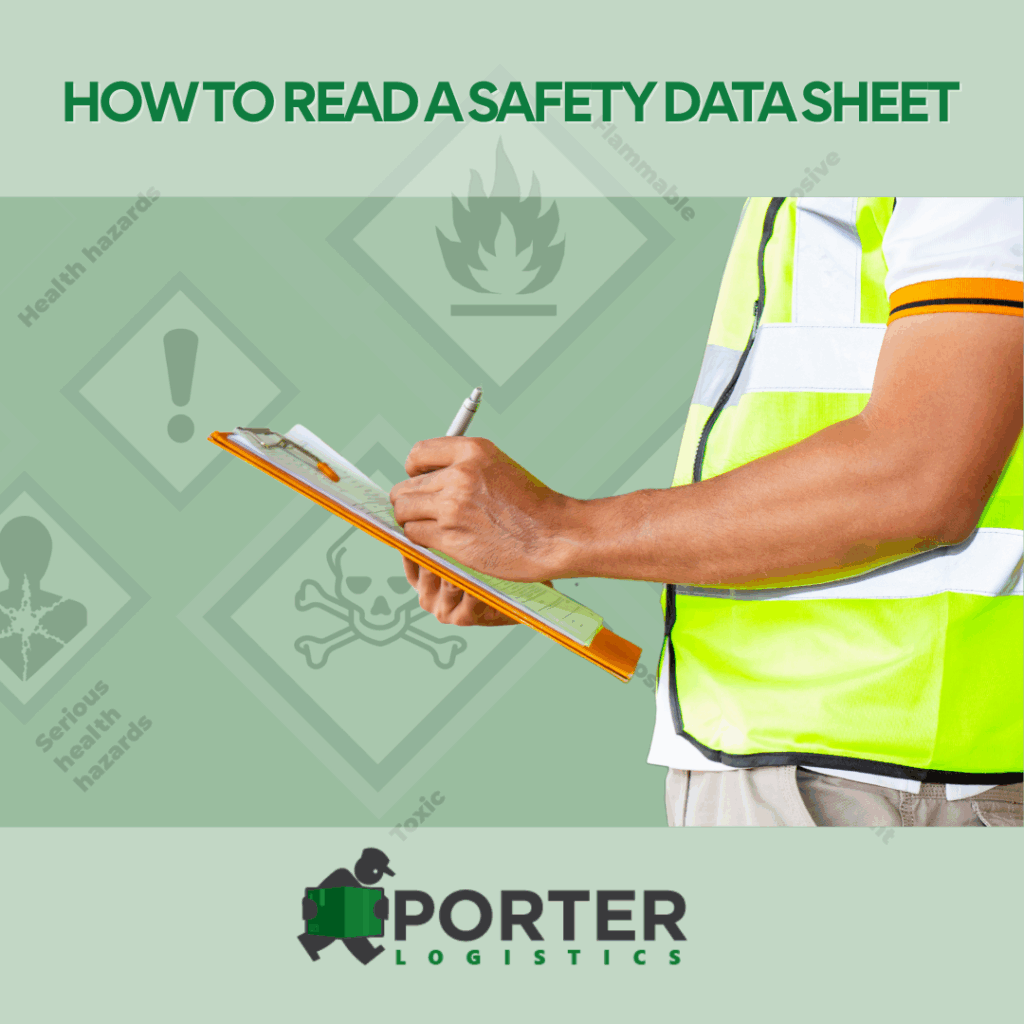
In the logistics and warehousing industries, understanding how to read a Safety Data Sheet (SDS) is as much a regulatory necessity as it is a potential life-saving measure. When handling hazardous materials, one wrong move due to misunderstanding or lack of information can lead to serious health risks, environmental damage, or costly violations.
Whether you’re handling, shipping, or storing hazardous chemicals, knowing where to find SDSs and how to interpret them can protect your team and keep your facility compliant.
A Safety Data Sheet (SDS) is a detailed document that provides information about the properties, hazards, handling, storage, and emergency procedures for chemicals and substances. SDSs are designed to help employers, employees, first responders, and environmental agencies manage chemical risks.
Under OSHA’s Hazard Communication Standard (HCS), manufacturers, importers, and distributors are required to provide an SDS for every hazardous chemical they supply.
The primary purpose of a Safety Data Sheet is to communicate essential safety and health information about chemicals to those who use or may come into contact with them. This includes:
SDSs are a critical part of a company’s safety protocols and risk management strategies. Without them, workers might not be fully aware, prepared, or equipped to handle dangerous materials.
An SDS is divided into 16 standardized sections under the Globally Harmonized System (GHS). These sections ensure that safety data is communicated in a consistent and organized manner worldwide.
Here’s a quick overview of what each section includes:
Each SDS must include accurate and complete data covering the following required elements:
Chemical manufacturers, importers, and distributors are responsible for providing an SDS for every hazardous chemical. However, employers such as warehouse operators, 3PL providers, and logistics firms are responsible for:
Using a Software to track SDS sheets contained in a warehouse is a good best practice. Read about how Porte partnered with Velocity for SDS management here
If a company fails to comply with SDS requirements, it can result in serious OSHA penalties and safety violations.
SDSs are required whenever hazardous chemicals are used or stored in the workplace, transported or handled by employees, and/or supplied to other facilities or customers. This requirement applies to all workplaces under OSHA jurisdiction, including warehouses, manufacturing plants, and logistics centers.
If an SDS isn’t readily accessible, there’s little point in having one at all. SDSs must be available to all employees during every shift. Today, many companies:
At Porter Logistics, workplace safety is a top priority. We work to ensure that SDSs are always available and regularly reviewed as part of our compliance protocol.
OSHA does not specify an exact timeframe for retaining SDSs, but best practices and some regulatory interpretations recommend keeping SDSs for as long as the chemical is used or stored.
It’s also recommended to retain old SDSs for at least 30 years as part of exposure records (per OSHA standard 1910.1020). Maintaining historical SDSs is important for long-term worker health tracking and legal compliance.
If you’re a manufacturer or distributor introducing a new chemical to the market, you must prepare an SDS that meets GHS standards. Here’s how to create one:
For most companies in logistics and warehousing, creating SDSs isn’t necessary, but knowing how to interpret them is crucial.
When you learn how to read a Safety Data Sheet, you’re doing more than just checking off a compliance requirement, you’re understanding a cornerstone of warehouse safety. Whether you’re managing hazardous freight, running a distribution center, or operating a 3PL warehouse, knowing how to navigate and act on SDS information can make a real difference in workplace safety.
At Porter Logistics, our teams are trained to work safely with chemicals and maintain full SDS compliance across all operations. Looking for a logistics partner that prioritizes safety and compliance? Contact Porter Logistics today to learn how we can support your supply chain needs.
In the food industry, precision is far from just a goal—it’s a necessity. With rising consumer demand for fresh, perishable goods and increasing regulatory scrutiny, cold chain management is a non-negotiable component of food logistics. So how can you ensure that your solution is error-proof and scalable?
Whether you’re shipping frozen seafood or farm-fresh produce, managing temperature-sensitive products throughout the supply chain directly impacts food safety, product integrity, and brand reputation. If you’re navigating the cold chain in or around Atlanta, Porter Logistics offers a seamless cold storage solution built for modern food businesses.
Here’s what you should know about the importance of cold chain management in the food industry and how choosing the right partner can make a world of difference for your food/beverage supply chain.
Cold chain management refers to the end-to-end process of storing and transporting temperature-sensitive goods under controlled conditions. It spans all aspects of the supply chain from production to storage to transportation to delivery. Products must remain within safe temperature thresholds at every stage in this process.
In the food industry, cold chain management is essential for preserving product freshness, preventing spoilage, and maintaining compliance with health and safety standards. It goes without saying that hiccups in cold chain management can have major consequences for a business’ reputation and revenue.
From leafy greens to frozen entrees, the demand for high-quality, fresh, and safe food is higher than ever. In a sea of ever-growing competitors, your business needs to rise above or risk falling by the wayside. Meeting this demand hinges on a cold chain that functions flawlessly.
Cold chain management is the backbone of the food industry. Without it, businesses wouldn’t be able to get their product from point A to point B—let alone scale their operations.
When you understand the components of a successful cold chain, you’re better equipped to assess the strength of your current system.
Warehousing plays a central role. Our Atlanta cold storage warehouse features temperature-controlled zones for both frozen and refrigerated goods, giving food businesses flexibility and peace of mind.
Our Atlanta refrigerated warehouse includes temperature ranges between 35°F – 45°F and our freezer storage options offer segregated frozen rooms capable of temps as low as -20°F.
Getting products from storage to store shelves requires reliable refrigerated transportation. With that, you need real-time temperature monitoring and strategic route planning.
Modern cold chains rely on digital tools to monitor temperature, humidity, and transit conditions. These systems allow for rapid response to disruptions and greater transparency. Learn more about the 3PL technology we leverage at Porter Logistics.
Standard operating procedures for loading, unloading, and handling temperature-sensitive goods reduce human error and ensure consistency.
Despite advances in 3PL logistics technology, the cold chain still presents unique challenges:
It’s important that you choose a logistics partner that’s prepared to mitigate these risks is essential to protecting your bottom line. Porter Logistics is proactive, anticipating potential problems in the cold chain and incorporating fail-safe procedures to mitigate risk.
Atlanta is a logistical powerhouse—home to one of the world’s busiest airports, a strong highway network, and access to Southeastern ports. That makes it an ideal location for food companies managing regional or national cold chains.
Porter Logistics’ cold storage facility in Atlanta offers:
We understand that every product and every business has unique storage requirements. Our team works with you to design a cold chain solution that’s efficient, reliable, and tailored to your supply chain strategy. Receive a zero-obligation quote by submitting a form on our website.
Looking to enhance your cold chain management in the food industry? Start by asking the right questions:
If you’re unsure, it’s time to re-evaluate your strategy and your partnerships. If your 3PL provider isn’t confident in their answers, it may be time to consider other options.
As the food industry continues to evolve, so too must the systems that support it. Cold chain management in the food industry isn’t just about keeping things cold; it’s about protecting your product, your customers, and your brand.
At Porter Logistics, we do more than just provide cold storage. We’re invested in advancing the entire cold chain industry. As a proud member of the Global Cold Chain Alliance (GCCA), we’re aligned with the latest standards, best practices, and innovations shaping temperature-controlled logistics worldwide.
This partnership underscores our commitment to:
By staying connected to a global network of cold chain experts, we help our clients stay ahead in a competitive and highly regulated industry. Learn more about how Porter Logistics’ cold chain solutions can help you scale your business with ease.
Georgia’s role as a Southeastern logistics powerhouse makes it an attractive hub for businesses handling temperature-sensitive goods. Whether you’re managing food products, pharmaceuticals, or industrial chemicals, a cold storage building in Georgia is more than just a facility—it’s a strategic asset.
If you’re considering building, leasing, or outsourcing cold storage capabilities, this guide will help you understand the opportunities and challenges—and why partnering with an experienced provider like Porter Logistics could be the smarter move.
Georgia’s logistics advantages are well-established:
All of this makes Georgia—and especially metro Atlanta—a smart place to establish a cold storage operation. But should you build from the ground up or leverage existing infrastructure?
Cold storage buildings are capital-intensive projects. Constructing a facility from scratch involves:
For many businesses, a better solution is leasing space in a prebuilt, professionally managed cold storage facility. It offers:
In the food industry, cold storage is a compliance necessity and a brand reputation safeguard. Skimping on proper temperature control, facility hygiene, or inventory rotation doesn’t just risk spoilage. It can trigger FDA violations and costly recalls, supply chain disruptions, loss of customer trust, and irreparable damage to your brand.
With rising consumer expectations around food safety and traceability, companies can’t afford to rely on outdated or inflexible storage setups. You need a facility that ensures reliable cold chain management for the food industry, from inbound receiving to last-mile delivery.
At Porter Logistics, we understand these stakes. Our Atlanta cold storage operation is designed with the food industry in mind. We offer temperature precision, real-time inventory tracking, and GMP-compliant processes that keep your products safe and your brand protected.
Not all cold storage facilities are created equal—especially when your inventory spans a wide range of product types. From frozen seafood to temperature-sensitive vaccines and deli meats to cosmetics, each cold chain product category demands unique handling, compliance standards, and temperature precision.
If you’re exploring your options, whether for building or leasing, make sure the facility includes:
Look for the ability to handle frozen, refrigerated, and ambient products within the same warehouse footprint.
For food and pharmaceutical storage, FDA registration, pest control programs, and air-quality monitoring are must-haves. Learn more about certifications at Porter Logistics.
Cold storage is time-sensitive. Ensure the building is located near interstates, ports, and last-mile delivery hubs.
Choose a facility that offers more than just storage—look for order fulfillment, repacking, transportation, and inventory management under one roof. Explore all of Porter Logistic’s 3PL services and our technology integrations here.
If you’re searching for a cold storage building in Georgia, Porter Logistics offers a proven, turnkey solution. A member of the Global Cold Chain Alliance (GCCA), we are proud to offer an Atlanta facility that is:
Unlike many providers, we don’t just offer square footage—we offer complete cold chain support from receiving to outbound shipping.
While the idea of building a custom cold storage facility might sound appealing, it often introduces risk, delay, and hidden costs. For most growing businesses, leasing space in an established cold storage building in Georgia—especially one backed by full-service logistics—is a faster, safer, and more scalable solution.
If you’re ready to expand your temperature-controlled operations in the Southeast, Porter Logistics is ready to help. Learn more about our cold chain solutions and get in touch so we can develop a custom plan tailored to your needs.
When it comes to supply chain logistics, not all products are created equal. Some are highly sensitive to temperature changes, requiring specialized cold storage and transportation solutions to maintain their integrity and safety. These products make up what’s known as the cold chain—a temperature-controlled supply chain designed to protect perishables from origin to final delivery.
Continue reading to learn about the main types of cold chain products, why they require temperature control, and how businesses can ensure they meet the highest standards for quality and compliance through reliable cold chain solutions.
Cold chain products are goods that must be stored and transported within specific temperature ranges to avoid spoilage, degradation, or loss of efficacy. The required temperature zone can range from ambient (controlled room temperature) to deep freeze, depending on the product type.
Industries that rely heavily on cold chain logistics include:
Now, let’s take a closer look at the types of cold chain products that fall into each category.
Food safety and freshness depend heavily on proper temperature control. The food industry relies on cold chain logistics to comply with regulations like the Food Safety Modernization Act (FSMA) and to extend product shelf life.
Common cold chain food products include:
Partnering with a logistics provider that offers cold storage in key markets like Atlanta can reduce transit times and preserve food quality.
Pharmaceutical products often have strict temperature requirements to ensure safety and efficacy. Even minor fluctuations can lead to degradation or render medications ineffective.
Cold chain pharma products include:
Many of these require storage in the 2°C to 8°C (36°F to 46°F) range, or even ultra-low temperatures (as low as -80°C) for mRNA vaccines and other cutting-edge therapies.
From probiotics and herbal blends to omega-3 capsules and collagen powders, nutraceuticals often require refrigeration or climate-controlled warehousing to protect shelf life and product efficacy. Many are made with natural or live ingredients that can break down under heat, light, or moisture exposure.
Products in this category may include:
It might come as a surprise, but many cosmetic and personal care items are temperature-sensitive. Products with natural ingredients, active compounds, or preservatives often require temperature control to prevent spoilage or separation.
Examples include:
Improper storage can lead to changes in texture, scent, and effectiveness—damaging both the product and the brand’s reputation. Cold chain logistics helps maintain consistency and consumer trust across every shipment.
Cold chain logistics also plays a critical role in transporting specialty chemicals and lab reagents that degrade or become dangerous if exposed to heat.
These include:
These materials often require documentation and real-time temperature monitoring to remain compliant with environmental and safety regulations. Porter operates 750,000 square feet of certified hazmat chemical warehouse space in Atlanta.
Fresh flowers and plants are highly perishable, requiring cold storage from farm to retailer. From the moment crops are harvested or flowers are cut, temperature fluctuations can accelerate spoilage, reduce freshness, or cause irreparable damage.
Key examples:
For many of these items, maintaining a temperature range of 0°C to 10°C (32°F to 50°F) is critical during post-harvest handling, storage, and transit. Inconsistent refrigeration can lead to wilting, discoloration, microbial growth, or loss of market value.
Many times, a higher price tag comes with higher expectations for care. High-end products like fine wines, cheeses, and gourmet chocolates require precise temperature control to maintain quality and customer satisfaction.
This category may include:
Luxury retailers and distributors rely on refrigerated logistics to protect these delicate goods from melting, spoilage, or crystallization.
Whether you’re storing vaccines or shipping frozen meals, cold chain failure can result in major product loss, safety issues, and financial liability. That’s why it’s critical to work with a trusted 3PL partner that offers:
For any business operating in food, pharma, agriculture, or specialty retail, it’s imperative that you understand the types of cold chain products (and the risks they face without proper temperature control).
At Porter Logistics, we help brands safeguard their cold chain every step of the way with certified, industry-leading cold storage and transportation solutions. We’re a proud member of the Global Cold Chain Alliance (GCCA) and have the expertise to streamline your supply chain with scalable, certified cold chain solutions.
Learn more about our cold storage warehousing services and request a custom quote today.
Technology in logistics and warehousing is transforming the 3PL industry. As supply chains grow more complex and global, businesses must stay ahead to streamline operations, cut costs, and boost efficiency. At Porter Logistics, we know that embracing cutting-edge technology is crucial for maintaining smooth, high-performing supply chains that minimize risk for our clients.
As a leading third-party logistics (3PL) provider, we weave technology into every aspect of our operations—from warehousing and distribution to order fulfillment and transportation brokerage. In this post, we’ll explore how technology is reshaping logistics and warehousing, showcase our solutions at Porter Logistics, and highlight how our partner, Ram Tech, keeps us at innovation’s forefront.
Real-time tracking systems, automated order fulfillment, and advanced inventory management now enable greater operational efficiency, better customer satisfaction, and fewer errors. In warehousing, robotics, RFID technology, and sophisticated warehouse management systems (WMS) have streamlined inventory tracking, picking, packing, and shipping.
We pride ourselves on staying at technology’s cutting edge in the logistic and warehousing space. Our technology in logistic stack integrates and automates supply chain functions, making it simple for clients to manage products and orders without operational concerns.
A Warehouse Management System (WMS) streamlines warehouse operations, inventory tracking, and order fulfillment. It optimizes space use, ensures accurate inventory tracking, and accelerates picking, packing, and shipping. The system integrates fully with other platforms, providing real-time updates on stock levels, order status, and shipment tracking.
A robust WMS improves order accuracy, shortens lead times, and gives clients complete transparency through real-time insights into their inventory and operations.
Our API-enabled technology automates order and inventory management workflows, eliminating manual updates across platforms. With over 50 pre-built integrations for popular shopping carts and marketplaces, we make it easy to connect our WMS to clients’ sales channels, ensuring smooth order processing with minimal errors.
We use advanced EDI to streamline communication with partners and clients. Our system automates the transmission of business documents, from purchase orders to shipping notifications. This ensures accurate, real-time data flow, reduces errors, and speeds up processing throughout our supply chain.
Data analytics at the heart of our operations. By analyzing supply chain data, we spot inefficiencies, track performance, and make informed decisions. This helps clients reduce costs and optimize their strategies, whether finding the most cost-effective shipping methods or improving warehouse performance.
While our logistics and warehousing operations rely heavily on technology, it’s essential to recognize the role of our IT partner, Ram Tech, in supporting and enhancing these systems. Ram Tech has been an integral part of Porter Logistics’ ability to provide top-notch service to our clients. As an outsourced IT partner, Ram Tech specializes in providing IT solutions tailored to our specific needs, ensuring that our technology infrastructure is robust, secure, and scalable.
Ram Tech helps us manage and maintain our entire IT ecosystem, ensuring that all our systems and technologies are running smoothly. Here are a few ways they support our business:
Ram Tech provides critical network security services, ensuring that our systems and data are protected from cyber threats. With increasing data breaches and cyber-attacks, having a trusted IT partner like Ram Tech ensures that our clients’ information is safe and secure.
Integrating various software systems (WMS, TMS, ERP, etc.) is essential for seamless logistics and warehousing operations. Ram Tech ensures that all our systems work together efficiently, allowing us to provide a smooth experience for our clients.
Ram Tech helps us implement cloud-based solutions, which ensure that our data is accessible from anywhere, anytime. This is especially important as we manage vast amounts of data for our clients across various platforms. Their cloud services also allow for greater scalability, so we can easily expand our capabilities as our business grows.
With the fast-paced nature of logistics, it’s crucial that our systems are operational around the clock. Ram Tech provides 24/7 IT support, quickly addressing any issues that may arise, ensuring minimal downtime and smooth operations.
Outsourcing IT services to Ram Tech allows Porter Logistics to focus on what we do best—providing exceptional logistics and warehousing solutions to our clients while leaving the complexities of IT management to the experts. Here are some key benefits of using an outsourced IT partner like Ram Tech:
At Porter Logistics, we’re committed to using technology to drive innovation, boost efficiency, and deliver outstanding service. From advanced warehouse systems to cutting-edge transportation technologies, we use the best tools to streamline operations and help our clients succeed.
Our partnership with Ram Tech ensures our IT infrastructure stays robust, secure, and scalable, keeping us ahead in the evolving logistics landscape. Their IT expertise lets us focus on what we do best—providing seamless logistics and warehousing services.
Visit their website at Ram Tech to explore their offerings and discover how they can support your IT needs.
As the logistics industry evolves to meet increasing demand for faster, more flexible fulfillment, Atlanta continues to rise as a major U.S. hub for third-party logistics (3PL). We’re excited to share that Porter Logistics has been featured in Extensiv’s spotlight on top 3PL providers in Atlanta, highlighting our commitment to operational excellence, scalability, and customer service.
With years of experience in Atlanta 3PL warehousing, our team is proud to be recognized as a reliable and forward-thinking logistics partner in one of the country’s fastest-growing distribution markets.
The Extensiv article and testimonial highlights Atlanta as a logistics epicenter, citing its strategic location, robust infrastructure, and access to talent as key drivers behind the city’s growth in the 3PL space.
Here’s why businesses are turning to Atlanta for their logistics needs:
As a provider of 3PL warehousing in Atlanta GA, Porter Logistics is positioned to provide faster delivery times, lower freight costs, and tailored services to businesses across industries.
Being recognized in a respected industry publication is no small feat. At Porter Logistics, we’ve built our reputation on precision, transparency, and a deep understanding of our clients’ needs.
Here’s what sets us apart in the Atlanta 3PL space:
From startups to enterprise-level operations, we offer storage solutions that adapt to changing inventory and seasonal fluctuations—without compromising speed or accuracy of our operations.
We utilize cutting-edge warehouse management systems (WMS) and real-time data to streamline inventory control, order processing, and fulfillment, improving visibility and decision-making.
Whether you’re in e-commerce, food & beverage, or health & wellness, our team crafts personalized logistics strategies that align with your goals, compliance needs, and customer expectations.
As a local 3PL warehouse in Atlanta, we combine big-league capabilities with small-business attentiveness. Our dedicated account managers ensure fast communication and reliable service at every stage.
Being featured by Extensiv as a leading Atlanta 3PL warehouse reaffirms our dedication to helping brands grow through smarter, more efficient logistics. From 3PL warehousing to last-mile delivery, we offer comprehensive solutions to streamline your operations and boost customer satisfaction.
Whether you’re scaling up or seeking to improve supply chain performance, Porter Logistics is the trusted partner you need.
???? Contact us today to learn more about our Atlanta 3PL warehousing solutions and how we can support your business growth.
When you’re in the e-commerce business, one thing is clear – you need an efficient process for getting orders to your customers. You can have products that leave your competitors in the dust, but you’ll quickly lose your edge if those products are being shipped to consumers with issues such as:
To help minimize these issues, and to free up time to focus on core business responsibilities, many sellers choose to outsource their e-commerce fulfillment activities to a third party – but how do you know which company to hire? We know how challenging it can be to find a trusted partner when the options seem endless, so created a list of the # top qualities you should look for in an e-commerce fulfillment services provider.
But first, let’s explore some of the basics…
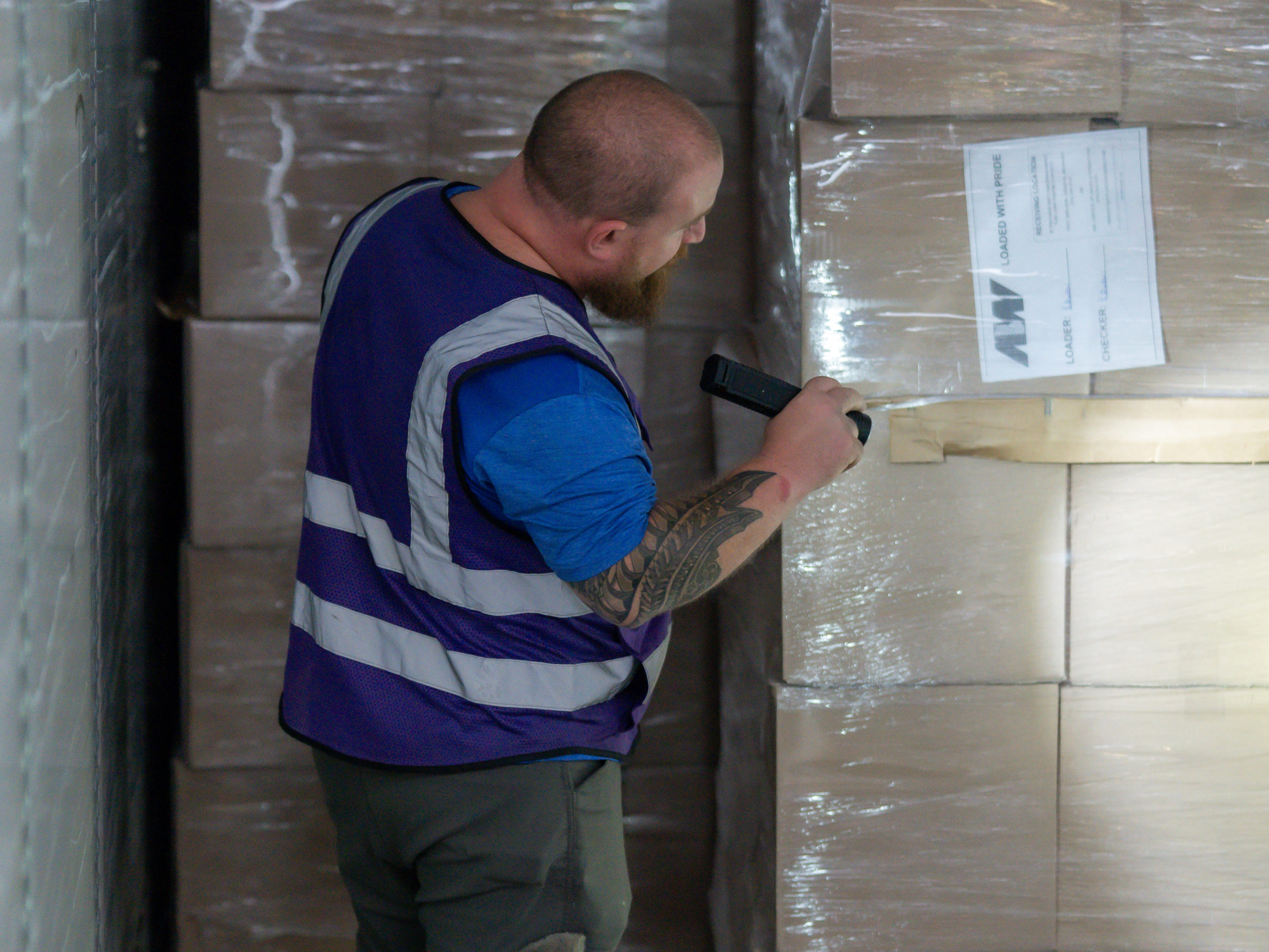
E-commerce fulfillment refers to the full process of getting online orders to consumers, encompassing every step of the journey from right after the point of purchase all the way to delivery. E-commerce fulfillment services (which can be completed by a third party for the seller) often include receiving, storing, picking, packaging, and shipping products.
E-commerce fulfillment refers to fulfillment for any orders that are placed online, whether that is through a manufacturer’s website, a retailer’s website, a retail marketplace, or social platforms. Direct-to-consumer (DTC) fulfillment specifically refers to fulfillment of orders sent from a company such a manufacturer or retailer directly without traditional retail intermediaries.
They are often used synonymously as the vast majority of eCommerce orders go to consumer but businesses also place orders online.
Whether you’re an individual seller or a large-scale business operation, an efficient fulfillment solution can help you optimize your warehouse, inventory, and shipment workflows to keep your orders moving at maximum timeliness, accuracy, and efficiency.
Some of the benefits of an effective e-commerce or DTC fulfillment solution can include:
Not to mention, when you hire an expert third party such as a third-party logistics company (3PL) to handle your e-commerce or DTC fulfillment, your team can focus energy on the responsibilities that are core to your business, such as product design, manufacturing, branding, marketing, and more.
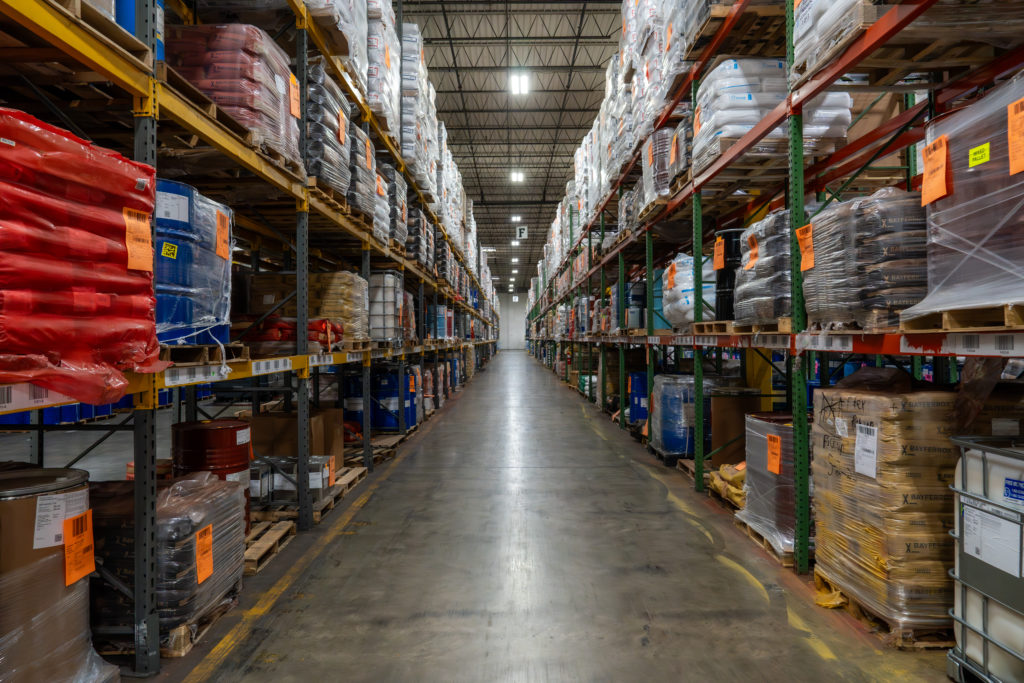
As you begin your search for an e-commerce fulfillment partner, it’s important to remember that not all service providers are created equal. There will be some providers that extend a more robust offering of services that better align with your needs as well as a greater level of logistical expertise. Here are a few qualities to consider in your search.
Your fulfillment provider should offer a commercial warehousing solution that can address your needs in a number of ways, including:
Your warehouse location is an integral part of your fulfillment process, as this is where your products are being initially delivered, sorted, housed for potentially long periods of time, and shipped from. The facilities should be clean, secure, and ready to house your inventory.
With large-scale warehouse locations in Atlanta, Savannah, and Tampa that handle numerous types of storage needs, Porter Logistics is a leader in commercial storage in the southeastern U.S. We have a network of partner sites throughout the country.
Storage is only one piece of the entire fulfillment journey. A good e-commerce fulfillment services provider can assist with a variety of needs, whether it involves custom packaging, advanced transportation requirements like transloading and international shipping, or assistance with returns. Additionally, if your business handles both DTC and B2B orders, it can be helpful to choose a partner that can handle both types of orders, allowing you to keep all your fulfillment logistics under one roof.

A one-stop-shop can maximize convenience for your team and help you better streamline your supply chain operations to reduce hassle for your team while boosting business efficiency.
Porter Logistics is a 3PL services provider that fits this bill with a diverse range of services (for both D2C and B2B customers), including warehousing, picking, kitting, custom labeling, order imports and exports, reverse logistics, inventory overflow logistics, and much more.
The most efficient partners are those that use state-of-art technology to streamline the fulfillment process, leveraging minimal input for maximum output and saving everyone time and energy through the process. When it comes to e-commerce or DTC fulfillment, it’s best to work with a 3PL that provides access to software that helps you:
With the right technology, you can take the guesswork out of your fulfillment logistics and increase transparency and accuracy when it comes to your orders and inventory. And don’t forget to ask any prospective partners if their technology integrates with other platforms you use.
At Porter Logistics, our clients gain access to our proprietary 3PL technology and valuable tech integrations. Through our dashboard and warehouse management system, you can easily track your warehouse inventory and optimize your workflows. We offer pre-built integrations with more than 50 shopping carts and marketplaces.
In the world of e-commerce, speed is a necessity, especially when you’re competing with multi-billion-dollar companies that ship to customers in one to two days by standard. Make sure to look for a fulfillment center that can deliver a well-thought out supply chain strategy that can keep your products moving on schedule so you can keep customers happy.
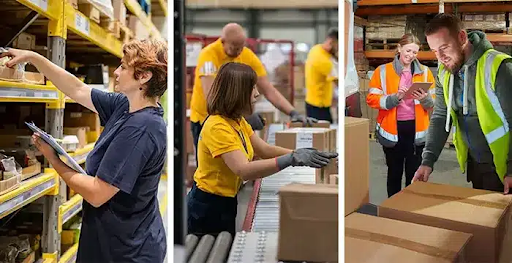
Porter Logistics offers same-day order processing with a 99.9% accuracy rate. This speed and efficiency empowers businesses to meet their two-day shipping service level agreements (SLAs) and maintain high customer satisfaction.
You shouldn’t have to guess whether the e-commerce center you’re working with is playing by the rules and meeting regulatory and industry standards. Choose a company that undergoes regular audits by governmental and private agencies and has the certifications to show for it. This is especially important if you sell products within a highly regulated institute, such as food and beverage items and pharmaceuticals.
Porter Logistics is committed to meeting the highest quality, safety, and cleanliness standards in the industry, undergoes regular third-party auditing, and maintains numerous certifications and compliance achievements, including but not limited to:
Porter Logistics can handle all the details so you can focus on growing your business. Our team is equipped to help you refine and execute your fulfillment process from start to finish. Learn more about Porter Logistics and how we can help you take your e-commerce operations to the next level.